New London Architecture
5 Minutes With...Daniel Pöhner
Tuesday 14 November 2023
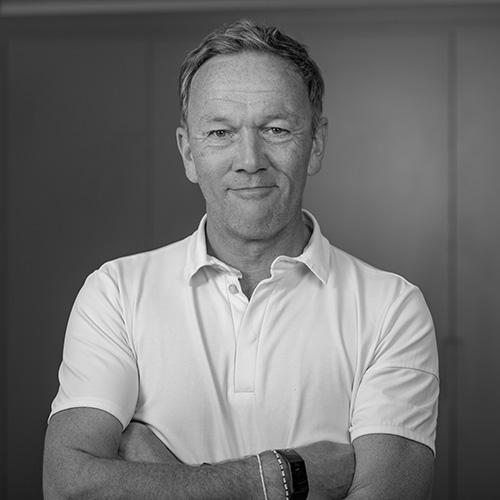


David Taylor chats to Daniel Pöhner, Director at Baumschlager Eberle Architekten, about the 2226 concept it has developed to dramatically cut energy and construction costs.
David Taylor
Hi Daniel. How are you?
Daniel Pöhner
I'm fine thanks, David. How are you?
David Taylor
I'm very well! I wanted to talk to you about something you were giving a lecture about at the Bartlett today - your 2226 concept. Before you explain that, how did it go?
Daniel Pöhner
It was very good because there were some interesting questions asked that I never really thought about, from students. You never really get these kinds of questions which are related to the construction of the building, such as how the building is constructed, how much co2 is embedded in the building, etc. So, yes, it was quite fun, actually...
David Taylor
Well, before we get to those questions and how you answered them, perhaps for our readers who don't know anything about this concept, could you just explain precisely what it is? I mean, from my perspective, and a little reading about it, it's called the 2226 concept because those are the ambient temperatures it maintains within the building and there's one prime example of this building in Austria, which is 10 years old, already. But apart from that, can you explain how it does that without heating and cooling?
Daniel Pöhner
Yeah, sure. Maybe I have to explain the history of it, because it came along while we were constructing a university building in Luxembourg, for which we did the tower part for the university. It was naturally ventilated, and without any air conditioning, but with heating at the time. So, we thought, okay, this works quite well, even with just natural ventilation; we got quite good results from this building. And we thought: maybe we just have to push it a little bit further, to actually get rid of all the heating and the cooling in the building. The problem was, we had to rely on people opening and closing the windows in Luxembourg - that was not really working perfectly well, because people tend to forget to open the window at night. It kind of worked fine, but not good enough. So, at the time, we thought: how can we actually get this working perfectly, so we don't need any heating and cooling?
We tested this with ideas at the university where our founder, Dietmar Eberle, was professor at the time in the ETH in Zurich with some engineers, and we looked at how maybe we should use the energy of the building as the storage, let's say, for the cooling and the heating – and let's orchestrate this by software. So: we open and close the windows via a building control system. And the way it works is there is a sensor in each space or there are defined zones within the building, and your sensor picks up the temperature and the co2 levels and humidity in each of these zones. And then you just open and close the windows as little as possible, just to get always to the perfect level for the co2 levels, for the temperature and for the humidity. And if you do that properly, you know, with intelligent software, which we developed ourselves, then you achieve a way to have – the whole year round – a temperature of 22 to 26 degrees. That's where the name comes from, ‘2226’, the comfort zone of a human being. That was, in a way, just the mathematics. But actually, to build it then was another thing. (laughs) We had to find the client that wanted to build a building like this. And, because that's difficult, we just did our own building; our own offices in Lustenau. And that's how it came along.
David Taylor
This is your building, the one in Austria that you inhabit as a practice. How has it performed in that 10-year period? I mean, obviously, that's quite a long period to analyse the data. Has it had an impact on your electricity bills? Presumably your energy bills have been pretty minor in that period, have they?
Daniel Pöhner
Yeah, of course. I mean, we have a lot of data. Every 30 seconds the sensors are measuring all these data. We have this over 10 years! (laughs) You can see over the whole of that time that it works perfectly fine. There are some times, on very hot summer evenings, that it might be a little bit over 26 degrees, but it's so minor in the overall picture. We were surprised how good that it works. And then there was also a period of adaption of the software in the first two or three years to make it perfect. Then, after a while it works perfectly fine.
And you're absolutely right; the energy bills – I mean, the energy consumption of the building overall was reduced by over 65% to a comparable building of this scale. And not only that, also the construction costs - the interesting part was that they also went down by 25%. Because you don't you don't have all this technical equipment. You don't have a suspended ceiling. In a way it's also kind of more architectural now, the building, because you can work more with these spaces; you don't have all this technical stuff - grills and so on. It's much cleaner architecture at the end. And we also believe it's much healthier, because naturally ventilating is closer to a human being. You just breathe the air that comes from outside - it's not this kind of exposure to extreme coldness while it's hot outside. The contrasts don't exist anymore as they do in classical buildings.
David Taylor
Sure. And obviously, it's got ramifications for other building typologies. Have you exported this technology to other typologies and other nations?
Daniel Pöhner
The building in Lustenau is a mixed-use building, actually, and that's the good thing about this technique, because it's independent of use; because it only looks at the persons in the space, how much they breathe. And it reacts to that, whether it's housing or an office, or a gallery. So, the building in Lustenau, for example, has a café and gallery space on the ground floor, it has some apartments on the upper floor and there's even a fitness club within it. So: it adapts to these situations. What you need, though, is the people in the building to heat the building, as the heating source. So: if you have the building empty for a long time, then you need to kind of restart the building. And sometimes it happens after summer holidays, when people go out and they come back a little bit chilly - then you have to put on the lighting for a few days before and the lighting is enough to heat up a building to the level where you need to know when they come back.
David Taylor
Yeah - or you could get them in the gym in the exercise area to work out quite heavily, could you?
Daniel Pöhner
(laughs) Yes! Exactly! The biggest workers are the computers - they give most of the energy in the building.
David Taylor
Daniel Pöhner
Yeah, absolutely. The UK is a quality market and so it's a great idea to expand to the UK. When we met here with potential clients, we figured out quite quickly that they have a great interest in this 2226. It's a very attractive approach for them. There's always a bit of skepticism that it actually works or not, but if you explain it, and if you invite them to Lustenau, then they understand how it works. And they see the potential in that and also in retrofit. We have had some conversations with potential transport retrofit projects in London. And I think that's also a relatively strong market in the future in London. Also, we think that could be interesting to look at, because they haven't done one yet. You can even use the embodied energy of a building, even better than just build a new one. And I think that would be very interesting thing to do in the future.
David Taylor
So, back to those Bartlett students with their tricky questions. What was the trickiest question? And how did you answer it?
Daniel Pöhner
The tricky questions…because we are working with the energy of the buildings, they asked, how much carbon is embodied in your building? And because the building works with concrete slabs, and has a double layer of Poroton brick, which is a self-insulating brick, which has all materials which are carbon heavy - burned in a kiln etc. They have other advantages for double brick – you don't need another insulation layer on top of them. We just have a simple lime render inside and outside that also helps to sanitize the building. They just asked did you check the co2 on the building? And we said: yeah, of course, because it's not a timber construction. It's higher than you probably would be if it's a timber construction. And then they said, why don't you do this in load bearing natural stone? And I said, actually, that could be an idea. We could do this in natural stone - we would probably have to insulate it from the outside, you know, but it was a point we never really considered – or even doing the slabs in natural stone. You know, if you do it right, and you're not too picky about the quality of the stone look, so that you can get actually to quite cheap to an affordable level to work with natural stone also in the UK. And there's been some studies being done on this in France. I thought that was an interesting comment.
David Taylor
Brilliant. Well, it sounds fascinating. Have you copyrighted this process? Is this your own thing?
Daniel Pöhner
Yes, we have a copyright – we have an in-house engineering group that's called 2226. They actually are part of the process when we work on a project, so they have the Copyright of this work, and that's usually how we work together. At the moment, we are doing projects more or less in house from our company. They are based in Lustenau.
David Taylor
Yeah. And where have you chosen in London to set up? Or haven't you plumped for an area yet?
Daniel Pöhner
No, we haven't yet. But, of course, I would like to be in Clerkenwell or somewhere like that. So, I think that will be coming quite soon. In a couple of months, we will know where we settle down. At the moment we are based in Hackney.
David Taylor
Okay. And lastly, what are your perceptions of London at the moment, with outside eyes on the city?
Daniel Pöhner
I actually used to live in London 10 years ago, so on coming back now I find it quite energizing to be honest. It's quite a busy city, with things going on. And there's more activity than we are experiencing at the moment in Paris even though the market is problematic, no? It is still a buzzing city and amazing town to live and work in, I think.
David Taylor
Yes indeed. Well, I look forward to meeting you over here when you settle down and have a new office to show me round.
Daniel Pöhner
Yeah, that would be great!
David Taylor
Excellent. Thank you very much, Daniel. That's, that's fascinating. And congratulations on the concept.
Daniel Pöhner
Thank you very much! Good to speak to you. Bye.
Share this news


Recent

News
Five minutes with... Nathan Spencer
David speaks with UKREiiF director Nathan Spencer on this year’s show, global growth, investment outlook and key highlig...

News
Can we enhance viability through enhanced communication?
Graham McCormick of Hayes Davidson explores how early-stage visual communication can unlock project viability, reduce ri...

News
Making Retrofit the Default, Not the Exception
Sarah Peterson from Atelier Ten explores how retrofit can become the default, with early insight and design helping unlo...
Stay in touch
Upgrade your plan
Choose the right membership for your business
Billing type:
Small Business Membership
£90.00
/month
£995.00
/year

For businesses with 1-20 employees.
Medium Business Membership
£330.00
/month
£3,850.00
/year

For businesses with 21-100 employees.

View options for
Personal membership