New London Architecture
Five minutes with… Alex Lifschutz, Lifschutz Davidson Sandilands
Thursday 17 September 2020
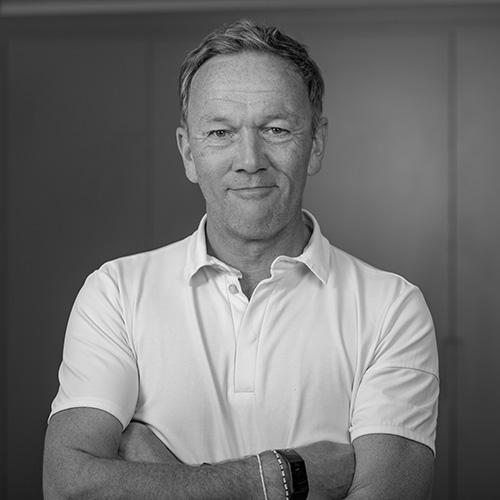

David Taylor catches up with Alex Lifschutz to talk lockdown coping mechanisms and switching off, design-Zooming vs office life, sociology and psychology as a boon to architecture, Employee-owned trusts, the Illuminated River and ‘Barcelona-on-Thames’
David Taylor: Hi Alex. How have you been?
Alex Lifschutz: Very good, very good. Yes. Interesting times!
DT: What’s been your main thrust, these last months, vocationally and recreationally?
AL: Well, I think that obviously adjusting to the lockdown is something everyone's had to do. Curiously, we were better prepared for the kinds of communication that we've had to get experienced with, because we've been working with an artist in New York called Leo Villarreal on a wonderful project to light London's bridges with art. I can't remember who introduced who to the idea of Zoom but we've been using Zoom in the office for three years or so, a team of eight of us. So there's a sort of familiarity with that, plus we have an office in Glasgow so we've been doing Zoom and other kinds of tele-conferencing calls with them, discussing design. So, in a curious kind of way we were quite well prepared, and I have to say that the equipment is just magical.
The idea that you can just use your own little laptop as a remote control to your office machine, it's magical.
DT: So it's essentially been freeing, but has it also had its downsides mentally?
AL: Well I'm used in the house here as the remote-remote!
DT: (laughs)
AL: Somebody barks out ‘change the channel’ or ‘we don't want to watch that’ and I navigate three different systems that we have - you know, whether it’s terrestrial or Sky or whatever, to find the right channel. I'm used to a certain amount of interplay in these kinds of thing, but I have to say it becomes too much. A conversation that we have all the time with you and with others about the intrusion of technology into daily life is one I'm sure that everyone shares. It is: to what extent can you actually free yourself from all of these different modes of communication? Telephones, texts, WhatsApp and all of that. I haven't learned the discipline of when to switch off.
DT: Has this period changed in any way the way you design in terms of what you design as well as the how?
AL: That’s very curious. The way in which we normally design in the office is that we put stuff up on the wall. There is a sort of sequence as a narrative to it that is evident immediately because you're looking at a complete range of pictures, of drawings that started one end and go to the other. The way that's been pinned up has an effect on how that story unfolds, whether that's internally doing art and design reviews or with clients, and design in the end is much more interesting when it's a narrative than when it's a series of individual snapshots.
I think the downside of Zoom and teams and all of these methods is that the narrative is already there. There’s no way of replaying it or looking to one side or the other of the of the of the line of discussion which you can do with a wall of information. So it's very much a sequential way of doing things, just like a conversation like the conversation we're having. I think Zoom has its downsides. You can’t look at more than one drawing so easily; you can only look at one drawing when it's fully enlarged on the screen, so there are some issues there. On the other hand, you can very quickly pick up a discussion with somebody; an engineer or colleague in the company, and home in on a particular aspect, so it’s good in that respect. The other thing that's missing is the interplay and the way in which the body language tells you things about the story and the design.
DT: I've always been interested in your particular background because it's fairly unusual amongst the people I speak to in that you came to architecture I think from a sociology and psychology - I think you studied in Bristol -background. Has that given you a different perspective, would you say?
AL: I don't know. I actually started out doing bio-chemistry but that was far too difficult for me! I never read any of the books and I’m bound to say I probably didn’t read enough of the books in sociology and psychology. I think what it gave me and what I think was helpful was that there was a sort of scientific approach, to well, why are we doing this? What are the reasons? Can we make these assumptions? What is the evidence for this? And how strongly can we possibly push this idea if it doesn't work environmentally, if it doesn't work financially? So there is a sort of logic to the way things happen. What I also think is interesting, and one for you and maybe for people reading this, is: is there a difference between companies or architectural practises that are run by more than one person in our case? We're now an EOT: an employee ownership trust. But is there a difference in the way in which the design emerges, because there have to be conversations about the design. You can't just say: well I'm doing it ‘cause I just I just fancy it, which they which would be the case if it was a potentially a single person office, or a practice run by one person.
This comes back to the previous conversation about in COVID the conversations that you can have mean that the design emerges in a slightly different way.
DT: Couple more questions whilst I have time - this this one is quite a broad one but it asks you to be fairly self-reflexive. How would you describe your oeuvre as a practise, and how has it changed over the years would you say?
AL: That's a very difficult one for us, because we try to say - and I'm sure there's a certain amount of gloss in this – that we approach each project, each problem, each situation with an open mind, and we don't bring a sort of baggage of previous solutions to it. I say it is probably a gloss, because, architects are somehow trained to gloss things, aren’t they, but the evidence for that would be the fact that we do so many different kinds of things, and I'm really happy about that. So I've mentioned painting the bridges with light with the American artist, but we've designed bridges we have designed homes for people on very modest incomes in very large numbers and homes for people on high incomes, and we have designed, you know, student accommodation and all sorts of different kinds of dwellings but also offices, and community centres, and University buildings. So, for a smallish practice I think that's very interesting, and I think that maybe does reflect the fact that we approach problems ab initio so that we don't we don't have a style that we apply. It's a problem-solving approach.
DT: But is loose fit – something that I know you're very keen on – a central part of your broader ethos and if so, do you think it's more appropriate as a principle more so now than ever before?
AL: I think so. I think that's probably a throwback to sociology and psychology, because it seemed to me coming to architecture, that the history of the, at that time the 20th century; I started architecture school in ’74 - the history of the 20th century was one of huge change. Even forgetting the world wars. My father was born in 1905. I mean, he was born in the time of horse-drawn carriages. He was an industrialist and a technologist but when I talked to him about the change in his lifetime and when I looked forward to the potential changes in my lifetime it seemed to me that architecture had to facilitate that, rather than then stick with very fixed ideas. The problem for me with the Modern Movement was that it seemed to embody change and dynamic forms – you know, ships and aeroplanes and so on, but actually it was very constraining.
DT: Well I think I've almost run out of time; I'm looking forward to illuminated River; the next phases there of. I’m also looking forward to Barking Riverside - what's in store for that one, just lastly?
DT: Well I think I've almost run out of time; I'm looking forward to illuminated River; the next phases there of. I’m also looking forward to Barking Riverside - what's in store for that one, just lastly?
AL: Barking Riverside is a wonderful site; south-facing over the Thames. We've produced a masterplan for 11,000 homes and the first of those have gone up over the last couple of years, and are continuing apace, clearly with the challenge of COVID and house prices and so on. think the mayor called it Barcelona by the Thames…
DT: Yes indeed. Can we have the weather too?
AL: We have the weather for it and it's definitely a very sunny place.
DT: Brilliant! Thanks Alex, that's really great.
AL: All the best! Thanks. Bye!
Share this news


Recent

News
Five minutes with... Nic Durston
David sat down with Nic Durston at UKREiiF to talk about the sentiment at this year’s Leeds show, and how culture and co...

News
Rethinking Tall: From output to input in London’s next generation of towers
Following NLA’s London Tall Buildings Survey, Callum Tuckett, Managing Director at Multiplex, explores how digital innov...

News
From Retrofit to Futurefit: Reframing reuse for a resilient urban future
Ahead of the Built World Summit, Harry Cliffe-Roberts of Gensler explores why ‘Futurefit’ reuse must become central to c...
Stay in touch
Upgrade your plan
Choose the right membership for your business
Billing type:
Small Business Membership
£90.00
/month
£995.00
/year

For businesses with 1-20 employees.
Medium Business Membership
£330.00
/month
£3,850.00
/year

For businesses with 21-100 employees.

View options for
Personal membership