New London Architecture
Five minutes with... Andrea Botti
Tuesday 18 February 2025
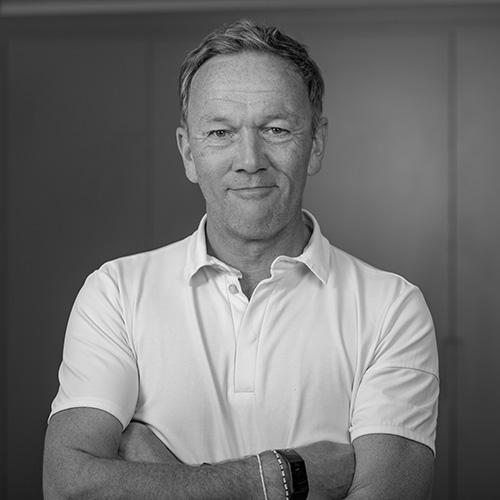

David Taylor meets Sustainability Manager at Stanton Williams Dr Andrea Botti to talk through the practice’s embodied carbon case studies, a new ESG strategy and his plans to get architects to gather more data on best practice.
David Taylor
Hello. Andrea, how are you?
Hello. Andrea, how are you?
Andrea Botti
Yeah, I'm good. Yourself?
Yeah, I'm good. Yourself?
David Taylor
Very good, thank you. I wanted to talk to you about your work at Stanton Williams, and particularly the embodied carbon case studies that you're doing for your current and recently completed projects. Could you explain a little bit about those - the methodology and the inspiration; the reason you're doing them?
Very good, thank you. I wanted to talk to you about your work at Stanton Williams, and particularly the embodied carbon case studies that you're doing for your current and recently completed projects. Could you explain a little bit about those - the methodology and the inspiration; the reason you're doing them?
Andrea Botti
Yes, thanks for the question. Embodied carbon case studies are something we have started working on this past autumn, and the idea is to focus primarily on the upfront carbon - so stages A1 to A5 up to practical completion - and to build an internal database for Stanton Williams which will work as a knowledge baseto inform future projects and help us more accurately predict how our design choices will impact a building’s carbon footprint . We considered quite a diverse range of building typologies - from office to residential, higher education, sciences and technology and beyond - at different RIBA stages. We looked at buildings that have been recently completed, as well as live projects. We began with the transformation of Rhodes House, a Grade II listed building in Oxford which exemplifies Stanton Williams' approach to adaptive reuse and working with existing buildings – a key concern for the practice. We opted for a tailored sustainability strategy to deal with the peculiarity of the heritage building and both site and program. When we began working on the project embodied carbon was not really at the forefront of any sustainability discussion. We realised that it was going to be important to look at the virtues of the project from a carbon perspective..
Yes, thanks for the question. Embodied carbon case studies are something we have started working on this past autumn, and the idea is to focus primarily on the upfront carbon - so stages A1 to A5 up to practical completion - and to build an internal database for Stanton Williams which will work as a knowledge baseto inform future projects and help us more accurately predict how our design choices will impact a building’s carbon footprint . We considered quite a diverse range of building typologies - from office to residential, higher education, sciences and technology and beyond - at different RIBA stages. We looked at buildings that have been recently completed, as well as live projects. We began with the transformation of Rhodes House, a Grade II listed building in Oxford which exemplifies Stanton Williams' approach to adaptive reuse and working with existing buildings – a key concern for the practice. We opted for a tailored sustainability strategy to deal with the peculiarity of the heritage building and both site and program. When we began working on the project embodied carbon was not really at the forefront of any sustainability discussion. We realised that it was going to be important to look at the virtues of the project from a carbon perspective..
And so, we engaged in an embodied carbon analysis in-house. It was myself with the help of my colleague, Ben Yeates. He joined the team last summer, and he's really been helping collect data, material quantities, refining these assumptions and looking at specialist software to conduct this analysis. So that involved a bit of training from myself as well. We realised that this should really be a standard internally, by presenting this data for Rhodes House, which, to be fair, also required some input from our external consultants, who were being quite cooperative. Our structural and other consultants fed into the study with their own figures.
Calculating carbon, for example for MEP or services, can be quite a detailed activity beyond our expertise. So, we're very happy to orchestrate the study, coordinate the input and then get some specialist contribution from relevant parties. This is what we have done for Rhodes House before focussing on other schemes. For larger projects, our consultants are typically required to conduct an upfront and whole life embodied carbon study. In these cases, we collect this data, break it down, interrogate it, and then transform it into a format that can make that data comparable with other projects. When you then put all these projects together, this is when the interesting discussions happen, because then colleagues are able to see projects against each other, and understand how different strategies may have actually been rewarded from a carbon perspective. And from then we would then start with the numbers, start with the data, develop some nice diagrams, and then go back to the project architects, and then query what opportunities and challenges existed on the project, why certain choices could be made, what others maybe were not viable from a technical, logistic, economic perspective. And so, it triggers a very interesting exchange...
David Taylor
Can I just interrupt, just briefly? So, Rhodes House, just to go back to that project, this is the scheme in Oxford that you did. It has, for example, a new spiral stone staircase in it. Are there any moves that you would have reconsidered or thought about in using different materials, perhaps, given, what you know now, about that project? Have you learnt lessons, or not?
Can I just interrupt, just briefly? So, Rhodes House, just to go back to that project, this is the scheme in Oxford that you did. It has, for example, a new spiral stone staircase in it. Are there any moves that you would have reconsidered or thought about in using different materials, perhaps, given, what you know now, about that project? Have you learnt lessons, or not?
Andrea Botti
I think, on that project specifically, I'm not sure we would be looking at doing things dramatically differently, if not perhaps in terms of some aspects of the specification. But then again, this has more to do with the fact that some of the information that is available now was not available when the design was being developed. Take EPDs, environmental product declarations, for instance, which communicate accurate data on carbon impacts, and, in a way, encourage manufacturers to do consider low energy, low carbon and low environmental impacts in their production processes. Another aspect perhaps, given the data we have collected, would be reconsidering the extent of excavation and the below-ground works. But I think the great value in that project remains the fact that an existing buildings has been given a new lease of life through a set of carefully conceived interventions. That is something that should be quantified and rewarded, beyond the carbon impact of the scheme.
Other discussions we are having at the moment are about office space. I'm just mentioning small anecdotal evidence in a way…
I think, on that project specifically, I'm not sure we would be looking at doing things dramatically differently, if not perhaps in terms of some aspects of the specification. But then again, this has more to do with the fact that some of the information that is available now was not available when the design was being developed. Take EPDs, environmental product declarations, for instance, which communicate accurate data on carbon impacts, and, in a way, encourage manufacturers to do consider low energy, low carbon and low environmental impacts in their production processes. Another aspect perhaps, given the data we have collected, would be reconsidering the extent of excavation and the below-ground works. But I think the great value in that project remains the fact that an existing buildings has been given a new lease of life through a set of carefully conceived interventions. That is something that should be quantified and rewarded, beyond the carbon impact of the scheme.
Other discussions we are having at the moment are about office space. I'm just mentioning small anecdotal evidence in a way…
David Taylor
Which office?
Andrea Botti
So it would be, for example, projects in central London, where opportunities for reusing and reclaiming steel structures were not available at the time. Were we going to look at the same project again, we could probably look for greater opportunities for circularity now that the supply chain seems a bit more ready. And in terms of program, in terms of cost, in terms of all the aspects that are key for a client. So, we will probably look a bit further into that.
David Taylor
Two other brief questions. Firstly, all this work is going towards your first ESG strategy, which you're going to be publishing later this year or next year, I think?
Which office?
Andrea Botti
So it would be, for example, projects in central London, where opportunities for reusing and reclaiming steel structures were not available at the time. Were we going to look at the same project again, we could probably look for greater opportunities for circularity now that the supply chain seems a bit more ready. And in terms of program, in terms of cost, in terms of all the aspects that are key for a client. So, we will probably look a bit further into that.
David Taylor
Two other brief questions. Firstly, all this work is going towards your first ESG strategy, which you're going to be publishing later this year or next year, I think?
Andrea Botti
Later this year, yes.
David Taylor
So, firstly, why do that? And lastly, my last question would be about the ACAN network that you're involved with. Could give me some insights into how collaborative that whole affair has been?
Andrea Botti
I'll try and be brief, because being Italian I tend to talk! (laughs)
Later this year, yes.
David Taylor
So, firstly, why do that? And lastly, my last question would be about the ACAN network that you're involved with. Could give me some insights into how collaborative that whole affair has been?
Andrea Botti
I'll try and be brief, because being Italian I tend to talk! (laughs)
David Taylor
(laughs)
(laughs)
Andrea Botti
So the one thing that really impressed me when I joined Stanton Williams, was the really distinctive design approach, which considers the urban fabric and identity of places, which is even more evident when a project involved the retrofit or adaptive reuse of existing buildings or structures. The transformation of a substantial portion of the historic Smithfield Market into the new London Museum exemplifies this approach. The ESG is really an opportunity to consolidate and codify all the strategies that Stanton Williams has developed and is developing while working on these incredibly complex projects, so that we can be clearer and more confident in terms of communicating these both internally and externally and to propel our ambitions even further. Building on my previous experience working on sustainability manifestos, we identified an opportunity to improve our reporting on the Social and Governance aspects, collating all the good initiatives that we are involved in. There's a lot of work on EDI - equality, diversity, inclusion – and on professional development, mentoring, outreach, and lots of great things the practice is doing. The aforementioned carbon case studies do fit within the Environmental section of the ESG and reflect a commitment to more rigorous reporting in this area too. Going forward, we endeavour to have embodied and a whole life cycle carbon analysis for of our projects. Of course, there are challenges in terms of fees, in terms client buy in, but we are very happy to be engaged in a multi-disciplinary discussion with our consultants and clients to achieve this goal.
Same for POE - post occupancy evaluation. We're about to engage in our first BUS Survey, is the building user survey framework, which mostly focuses on building occupiers - their comfort, their space usage, their feedback on the building. And we are making the statement that we intend to ramp up how many POEs we take every year, starting from one per year, perhaps going to three or four per year by 2030, of course, compatibly with the number of buildings that are completed and occupied. I believe that ESG strategies can be a key tool to set the tone and ambition for a practice, and it was important for us to have this in place as an aspirational document as well as a pathway to action.
David Taylor
So: lots of data collection in order to sort of prove what you're doing, is effective, in essence?
David Taylor
So: lots of data collection in order to sort of prove what you're doing, is effective, in essence?
Andrea Botti
I am all about collecting data, but it is also important to record projects from a qualitative perspective, because not everything can be quantified. But whenever something can be quantified, I'm all for getting these numbers and figures, interrogating them, and even when numbers are not perfect, engaging with them. We need to demystify this idea that numbers are the domain of engineering consultants only. We should all be capable to interrogate these figures. Take the U value for instance, architects now have a pretty good understanding of how this might impact a building’s envelope, its thickness and materiality. We should aim at developing something similar for things like embodied carbon and circularity, which is really my goal at this stage at Stanton Williams.
David Taylor
Well, I have no doubt you'll be successful in this given the enthusiasm and passion that's clearly in your voice there. So just very, very briefly as a last question, as we're well over time, but I presume this is in the same area as your work with the ACAN network, in terms of pushing that message across a wider audience?
Andrea Botti
Yes, I've been involved with ACAN, as much as time allows, for about less than a year. I have participated in the wider discussions, but more recently, I have been part of the embodied carbon subgroup. We are inviting guest speakers from leading architectural and engineering firms as well as academia, with the goal to create as large a base of interested parties as possible and bring the technicalities of this assessment to a degree of understanding that every practice, no matter the size, can actually feel empowered to enact. I think that's timely and will be impactful.
David Taylor
I am all about collecting data, but it is also important to record projects from a qualitative perspective, because not everything can be quantified. But whenever something can be quantified, I'm all for getting these numbers and figures, interrogating them, and even when numbers are not perfect, engaging with them. We need to demystify this idea that numbers are the domain of engineering consultants only. We should all be capable to interrogate these figures. Take the U value for instance, architects now have a pretty good understanding of how this might impact a building’s envelope, its thickness and materiality. We should aim at developing something similar for things like embodied carbon and circularity, which is really my goal at this stage at Stanton Williams.
David Taylor
Well, I have no doubt you'll be successful in this given the enthusiasm and passion that's clearly in your voice there. So just very, very briefly as a last question, as we're well over time, but I presume this is in the same area as your work with the ACAN network, in terms of pushing that message across a wider audience?
Andrea Botti
Yes, I've been involved with ACAN, as much as time allows, for about less than a year. I have participated in the wider discussions, but more recently, I have been part of the embodied carbon subgroup. We are inviting guest speakers from leading architectural and engineering firms as well as academia, with the goal to create as large a base of interested parties as possible and bring the technicalities of this assessment to a degree of understanding that every practice, no matter the size, can actually feel empowered to enact. I think that's timely and will be impactful.
David Taylor
Fantastic. Well, thank you again, Andrea, and congratulations for making the first five minutes with into 18 minutes! (laughs)
Andrea Botti
I warned you, but take full responsibility for being so verbose!
David Taylor
Well, it's all really good stuff. So, thank you again. Thanks for your time.
Andrea Botti
Thank you very much. I appreciate it. Bye.
I warned you, but take full responsibility for being so verbose!
David Taylor
Well, it's all really good stuff. So, thank you again. Thanks for your time.
Andrea Botti
Thank you very much. I appreciate it. Bye.

Share this news


Recent

News
Five minutes with… Leigh Johnson
David Taylor meets Leigh Johnson, managing director of Barking Riverside, to quiz her over the 20,000 homes project and...

News
Winning Design Announced for 'Hope in the Square' Competition
NLA in partnership with the London Borough of Southwark are proud to unveil the winning design of our 'Hope in the Squar...

News
Our partnership with ActionFunder to deliver measurable social value
NLA and ActionFunder partner to give London’s built environment sector a scalable way to deliver and prove community imp...
Stay in touch
Upgrade your plan
Choose the right membership for your business
Billing type:
Small Business Membership
£90.00
/month
£995.00
/year

For businesses with 1-20 employees.
Medium Business Membership
£330.00
/month
£3,850.00
/year

For businesses with 21-100 employees.

View options for
Personal membership