New London Architecture
Five minutes with.... Ian Apsley
Tuesday 08 September 2026

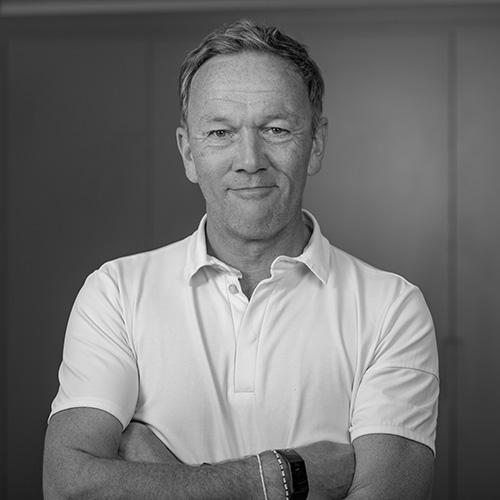

David Taylor meets Broadway Malyan CEO Ian Apsley to talk about ‘designing without borders’, Google in India, the Camden Film Quarter with Stitch, thinking ‘in decades’ and challenging market conditions.
David Taylor
Hi, Ian. How are you doing?
Ian Apsley
Very well, thank you.
David Taylor
Very good. I wanted to ask you about your imminent new identity – or at least dig slightly beneath the surface of it. It's called ‘designing without borders’; briefly, could you explain the key principles behind that?
Ian Apsley
That's correct. ‘Designing without borders’ has really come from the launch of our new business strategy last year, where we've tried to change the way that we think as a global design practice, and therefore the way we articulate that value proposition to our clients. So, we don't really see it as a marketing slogan or a branding slogan. It's really a description of how the practice operates. That's really organised under four areas. So, I think the first one of those is global intel and local identity. We're not unique, but one of the things that makes us different to a lot of our competitors is our international model. We don't have big headquarters and then one or two operations around the world. We have 11 studios, all of which are of a reasonably significant size, able to handle projects in their own right.
David Taylor
In which cities are you, chiefly?
Ian Apsley
Currently, now UK is London and Birmingham. Then, moving into Europe, our oldest studio outside the UK now, which turned 30 this year, is Lisbon, Madrid. We have Warsaw. Moving further east is Dubai, Abu Dhabi, and then we're Mumbai, Singapore, and Shanghai.
David Taylor
So, nothing in America?
Ian Apsley
No, nothing in North America. We often discuss it, and I think it's something for the future. We have completed schemes in North America. We did the Royal Caribbean Cruise Liner Terminal in Miami, which was our first end-to-end service building, which was completed just at the end of the pandemic, and we've done some big masterplans in places like Calgary in Canada. But yes, it's never been a huge focus for us. Partly because I think competition's very good, but also partly because our focus has been in growth markets, really, and emerging economies.
David Taylor
Where is particularly strong at the moment?
Ian Apsley
Really strong at the moment for us is India where we have our Mumbai studio, where again we're by no means a startup. We've been operating in in India for 14 years now. We set up in 2012. It's a fully-fledged design studio. It doesn't work as a kind of service centre like many of our competitors do. We have a fantastic young design team there servicing projects. We delivered the Google Ananta project last year, which is a huge, one and a half million square foot headquarters.
David Taylor
It's massive, isn't it?
Ian Apsley
Google in Bangalore. Yes, a really, really interesting project, and has I think caused quite a lot of interest in in the market.
David Taylor
Has it? For what reason?
Ian Apsley
Well, from other prospective clients who are interested in similar kinds of facilities, actually. The original commission was as a speculative office, but Google came on board as a tenant through the process, so it landed up basically as a bespoke design for Google. There are some really interesting spaces inside; just how all the communal spaces work, how people come together, how they move through the building, the multiple F&B offers we have through throughout all the spaces, how the landscape works. You know, we design the landscape as well. So yes, a really interesting project.
David Taylor
And closer to home, I notice you've won consent for Camden Film Quarter fairly recently. Which is interesting because you've done it with Stitch, who I think joined forces with last year. How's that all going?
Ian Apsley
We brought Stitch into the group just over 18 months ago now, and that was driven by us wanting to take a different, more urban design led, urban design and place making-led approach to housing in the UK. Residential and housing design has been basically the DNA of Broadway Malyan from when it started in 1958 with the winning of a housing competition. So, housing and housing residential has always been at the heart of what we do. But we felt, to align with other parts of our global practice, really, which does a lot of masterplanning and urban design projects, we wanted to take that different approach, and working with Stitch was a way to do that, perhaps more quickly than setting up our own internal team with that ability. So, I think the desire for us to do that, and the desire of the Stitch team to be part of something bigger - all of those aspirations aligned, and it's been a very successful relationship. CFQ started technically, I guess, as a Broadway Malyan commission, but we decided that that was best delivered by the Stitch team, and it's been an excellent project. It was, I think, very favourably received through the planning process at Camden. It's obviously part of that much bigger Camden Film Quarter masterplan, which was commissioned by Yoo Capital, which SPPARC Architects led. Our role there was to really focus on the housing and regeneration components, which are a very substantial component of the scheme. Certainly, from the regen perspective, because I think providing the new homes was a big part of the favourable consideration that scheme got through the planning process,
David Taylor
That alliance with Stitch makes me think of your merger in 2022 with Will + Partners. Have you got your eyes on similar moves in the future?
Ian Apsley
I think we would never say never. I think for us there's a number of things that have to be right. I think the culture of the businesses have to be aligned, and the mutual benefit as well, really. These things have worked in the past where we've identified a need to grow, and where it's worked for other practices because they want to be part of something bigger. With the Will + Partners business, that was more plugging into our international network to be able to scale workplace clients on a global basis. With Stitch, I think it's something different. I think it's about being part of a DNA of a bigger practice and tying into our ability to deliver projects through to the end. Stitch traditionally was a 12-year-old company when we merged with them, but they only really work from RIBA Stage Zero up to Stage Three. And I think with the advent of the Building Safety Act and all of those things coming through now, they wanted to be able to offer a capability that went far beyond that, and we had to take their clients through Gateway Approvals process, etc. So again, there are a lot of aligned interests in bringing all of those things together.
David Taylor
Lastly, I noticed from your CV that you've been at Broadway Malyan since 1999. It's a long time!
Ian Apsley
It's a long time.
David Taylor
And you have sort of risen up the ranks. How has it been for you, and what's coming next?
Ian Apsley
I mean, it's been a really interesting journey. I always describe it as that it feels to me like I've had four different careers inside Broadway Malyan. I joined with an intention to probably get some large practice experience and leave within a couple of years, and I never left! The reason I never left is just because of the opportunities I was given. As a relatively junior architect, I was running a £100 million project on site back in 2000, and a £100 million project back then was big.
David Taylor
Yes, still is! (laughs)
Ian Apsley
Well, still big! But, you know, even bigger back then, and I was given an opportunity by people who believed in me, and I was able to prove myself. I moved on to run one of the largest studios in the UK. I then moved out to the Middle East in 2008.
David Taylor
Abu Dhabi?
Ian Apsley
That's right, to Abu Dhabi. I was working between Abu Dhabi and Dubai, which was originally going to be a six month secondment and landed up being six years, which is a fascinating time in the development of that whole region, and also the development of our practice. And at that time, I was also assisting with projects in the Far East, Asia and in Africa. I decided to move back to the UK in 2015, ran our UK division for a period of time and then became the managing director and the CEO in 2019. So, yes, I very much look at it as at least four different careers inside the business, and this is what I tell junior colleagues when they join us. We do a quarterly global call with every new colleague that's joined the business, and there's always an opportunity for Ed [Baker], our chairman, and I to talk about our own experiences and what our lived experience is at Broadway Malyan. And that's one of the things that I always talk about, which is, I think it's a practice that provides fantastic opportunity for individuals – providing that they're up for the challenge.
David Taylor
So, what's next beyond this – I hasten to call it a brand identity. But what's next?
Ian Apsley
What's next? Well actually, first, just on that point, David, on the ‘design without borders’ there is more to say. There's integrated design, which is: we have three core specialisms inside the business, which are around masterplanning, architecture, and interiors, and it's about how we have a borderless approach to those, so we don't run hard boundaries between colleagues that sit in those teams. We have people from different professional backgrounds that sit there. We will have architects that will work in interiors. We will have masterplanners that will work on architectural projects, etc. So, I think that's quite a compelling offer to some of our clients, because they can benefit from an extended service, whether actually that was that was part of an original commission or whether it wasn't. The third part of it is really about long term partnerships with clients. Our strategic aim was to get over 65% of our commissions on a repeat commission basis with clients. We're actually running at over 70% at the moment, so that's clients that come back to us again and again for new projects, be that in the same market or the same sector or maybe something different. That's something that we really believe in because we believe the best client relationships create the best projects. It's normally the most enjoyable design process, which normally means the best design comes out of it, and that's great for our teams. Great for the opportunity we're able to provide colleagues, but it's great for client outcomes as well.
And then the last point really is around our ownership model, which is that we're an employee-owned practice. We're not unique in that respect. I think a lot of architectural and design practices who operate out of the UK are operating this model. But we've been in the EO business for over 10 years now. That's a project I led back in 2016, and it's been very successful for us. And it's about how that shapes the culture inside the business, the decision making, and the quality of those client relationships. All of which are debates that we have with colleagues in the business. So that ownership, that collective ownership of the business, I think creates a different kind of accountability, and it means that we tend to think in a much longer term way, rather than a practice that's owned by a group of shareholding individuals who maybe have self-interest. You know, for us, we think in decades rather than in quarters about where the practice is going and what comes next and making sure that we're always building for long-term value.
David Taylor
Yeah, well, good luck with it all. One very last question: If you had an adjective to describe the market conditions currently in in England, maybe London, what would that adjective be?
Ian Apsley
If it was a single word, I think it would have to be challenging. I think if it was two words, it would be challenging and frustrating.
David Taylor
Really?
Ian Apsley
Yes. Absolutely.
David Taylor
Why frustrating?
Ian Apsley
I can see it with other design practices and other professional services providers as well that there are definitely less opportunities to correct that around now than there were, so the market's just much more competitive. You've got to really stand out.
David Taylor
Do you cling to any silver lining or a chink of light at the end of the tunnel when it comes to the UK, and if so, what would that be that others could cling to too?
Ian Apsley
Absolutely. I think you have to. I've been around for long enough to know that everything is cyclical. Sometimes you just you've just got to hold your nerve. And that's certainly my counsel in inside the business that we make robust decisions. We make them well, and we stick to them.
David Taylor
Well, good luck with it all. Thank you very much for your time.
Ian Apsley
David, great to speak to you!


Share this news


Related

News
Five minutes with... Louise Ioannou
David Taylor speaks to HB Reavis’ Louise Ioannou about Space House, London’s office market, lettings to AI and tech firm...

News
Five minutes with... Marianne Brook
David Taylor meets OPDC Development Director Marianne Brook to discuss progress at Old Oak and Park Royal and how mayora...
Stay in touch
Upgrade your plan
Choose the right membership for your business
Billing type:
Small Business Membership
£90.00
/month
£995.00
/year

For businesses with 1-20 employees.
Medium Business Membership
£330.00
/month
£3,850.00
/year

For businesses with 21-100 employees.

View options for
Personal membership