New London Architecture
Five minutes with… Khevyn Limbajee
Thursday 07 May 2020
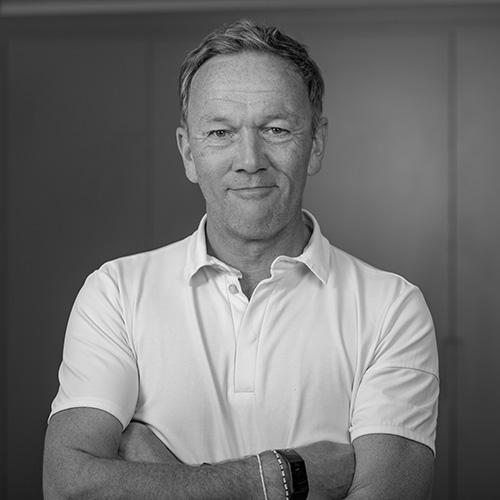

Khevyn Limbajee of Redwood Consulting talks to David Taylor about how a career that has included TV news and politics programmes like Panorama, Disptaches and the Politics Show and working alongside Ed Milliband has prepared him for being a councillor at Waltham Forest and, at the same time, helping developers to consult virtually to keep schemes going with Redwood
David Taylor: Hi Khevyn. How are you?
Khevyn Limbajee: Hi. Yeah, I’m good, are you alright?
DT: Very good thank you. I wondered if you could first of all just explain in a sentence about your job and how your life splits into two, as it were; one as a consultant to a PR firm and one as a politician. How do you square those two things, and how do they interface?
KL: Yeah, I work at Redwood Consulting which looks at the built environment across the whole property cycle: so public affairs, planning, PR, corporate communications across the built environment. Being a councillor (at Waltham Forest) basically we are concerned citizens, really. Concerned residents who are active in the local community and represent the local residents on very much bread-and butter issues from fly tipping to anti-social behaviour, getting more access to parks. All that kind of stuff impelled me to be a councillor and integrate it into my life and so obviously it reflects upon my day job as well. It gives an alternative perspective on things, so that's kind of how they interact with each other.
I've worked in other positions in other places as well and councillors are taken from all sorts different backgrounds. There are people who are manual workers or professors to everything in between, and that brings a richness to local government.
DT: What do you think your life as a councillor brings the other side of your life?
KL: I’ve been a councillor for 10 years or so and the bread and butter issues are the ones that take up a councillor’s life really - are our bins being picked up? Can you maybe to help this school to get a local grant? That is what councillors by and large do. Making decisions on public services certainly gives an insight when you're working with the built environment. These are the issues that councils, local authorities have to deal with from green spaces to access to diversity issues to access to equalities, disabilities, all these sorts of things are quite important to residents, so it informs my perspective. I was also cabinet for housing for a few years so again I understand things from that executive element of a council and how that council makes decisions across a whole range of different things. I’ve held positions in public health, care, housing, community safety - across a whole range of different things like so I have quite a broad knowledge of that. It gives a greater understanding of the pressures that councils have to deal with.
DT: You have quite a background in politics with the sort of capital ‘P’, or at least a larger ‘P’, with your TV work and also your work with Ed Miliband and Paul Boateng…
KL: Sure, I worked in parliament and then in television across current affairs and news programmes and things like The Politics Show. I was a reporter and producer; I used to run the BBC Politics Show for London so I got a really good insight into human stories that mean a lot to people. Current affairs and news is about the impact of politics and policy. So then I worked as well in in the Labour Party with Ed Milliband's team when he was leader of the opposition…
DT: …What was he like?
KL: Ed was an incredible politician with an incredible political mind, really. He's got an incredible policy line and a real passion for wanting to change the world for the better. So he was a remarkable politician in many respects but in an election he didn't quite win…
KL: Ed was an incredible politician with an incredible political mind, really. He's got an incredible policy line and a real passion for wanting to change the world for the better. So he was a remarkable politician in many respects but in an election he didn't quite win…
DT: Do you think they'll be there be more time for him now?
KL: Well he’s shadow business secretary, so he’s back into frontline politics which is a good thing for politics as a whole. His brother was brilliant as well, David Milliband. He obviously runs a big international charity, but it’s good to see Ed back into frontline politics.
DT: I’d be interested in your perspective about how politicians at the moment both locally and nationally view built environment issues. Obviously, housing is a very big topic and has risen up the political agenda, as has, arguably, transport, and issues of workplace even at the moment. Can you compare it to when you were in TV, running politics shows? Do you think it's risen up the agenda?
KL: Well, I was very active making television programmes in London when Ken Livingstone was mayor and that was 15 years ago, and things have changed dramatically. I mean, the inflation of house prices and the housing ladder; these difficulties to get on the housing ladder are a big concern I think. That's a big political issue I think all politicians have been wrestling with to make it more equitable.
DT: In your work for Redwood you do some work with developers on consultation issues. What would your tips be for developers in going down that line, particularly now when, I presume, they will have to think about virtual and other online systems?
KL: Virtual consultations are something to be embraced and something to be progressed. You know, we don't know when we’ll be back to face-to-face social gatherings, and I mean lockdown is going to slowly come to an end, but doing things virtually, you have to slightly alter how you do them. An exhibition that lasts two weeks instead of just a few days or a few evenings. So actually engaging virtually is great and actually getting what you want is the views of people - I think you can still have a very authentic feel and engagement with a local community, but in a slightly different way.
DT: And in a sense do you think actually it could be a boon to consultation insofar as it reaches parts of the electorate, if you will, that others might not have reached, to coin a Heineken phrase…?
KL: Yeah, so at Redwood we are doing at least four consultations right now, all of which are digital. And we absolutely believe that to be the case. We believe that with a digital consultation you can get to people – and potentially a wider cross-section of people. So you're right, there's a lot of potential there. And to actually explore that and deliver something that's slightly different and engaging and maybe a different cross-section of the demographic.
DT: And I presume it follows, then, that you think that this particular situation will result in better developments, better schemes?
KL: Yeah, certainly we at Redwood are absolutely pushing ahead with this and we are being innovative around this. And so you’re getting a different sort of participation. And we firmly believe you’re getting an authentic and deep and rich consultation.
DT: Last question. I presume you're pretty au faitwith working from home, and that the digital shift isn't so difficult for you guys? How are you shaping up?
KL: I think that’s a really interesting question. Working remotely mentally is something that we do with the company and are very close with all our clients getting into the issues and delivering what we need to do, remotely. I think, like everyone else, it’s altered the way we work, and as we go slowly back to work we will still have to look remotely a lot of time. And that has been a very interesting shift - I personally found it to be a very good and creative way of working.
Share this news


Recent

News
Five minutes with… Leigh Johnson
David Taylor meets Leigh Johnson, managing director of Barking Riverside, to quiz her over the 20,000 homes project and...

News
Winning Design Announced for 'Hope in the Square' Competition
NLA in partnership with the London Borough of Southwark are proud to unveil the winning design of our 'Hope in the Squar...

News
Our partnership with ActionFunder to deliver measurable social value
NLA and ActionFunder partner to give London’s built environment sector a scalable way to deliver and prove community imp...
Stay in touch
Upgrade your plan
Choose the right membership for your business
Billing type:
Small Business Membership
£90.00
/month
£995.00
/year

For businesses with 1-20 employees.
Medium Business Membership
£330.00
/month
£3,850.00
/year

For businesses with 21-100 employees.

View options for
Personal membership