New London Architecture
Five minutes with... Max Farrell
Tuesday 18 April 2023
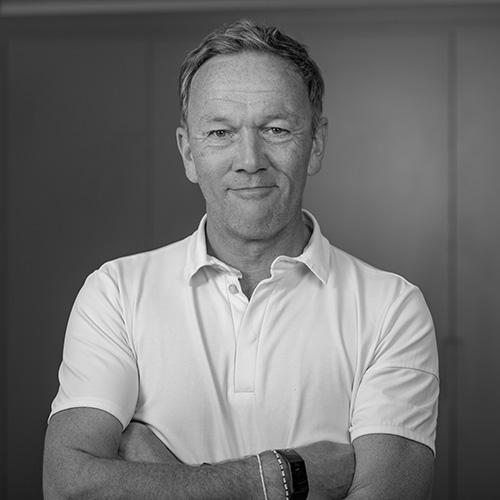

David Taylor
Hi, Max.
Max Farrell
Hi, David. Hi, how are you?
David Taylor
Good, thank you. I wanted to ask you a little bit about the ongoing work of the London Collective. We talked to you a while back, and things have sort of moved on, particularly in East London and the Royal Docks; I was wondering if you can tell me what you can about the prospect of F1 coming to East London?
Max Farrell
Well, yes, you're right. A lot has moved on! I think it was three years ago when we last spoke; I had just set up the London Collective and it was a bit of a leap into the unknown, as nothing like it existed. At least, not in our industry, anyway; there's other creative industries that are more familiar with these sorts of bottom-up networks of people with different specialisms, like the film industry, for example, where you have cast and crew that come together, project by project. So it was a bit of an experiment. But equally, I thought it was worth trying it out. I always felt, because the built environment is so complex, that sort of a network of people with different specialisms who also ran their own businesses, like an ecosystem, as it were, would be an interesting thing to try out. And I'm really delighted with how it's gone; it has sort of exceeded a lot of my expectations.


David Taylor
Really? In terms of numbers, for example?
Max Farrell
Well, we have about 50 members now, in about 30 different specialisms. But I wouldn't necessarily judge it by the number, because I always thought that that would be the right number. And, actually, we don't need many more than that, because it enables us to be a sort of one-stop-shop, if you like. You have the core disciplines of architecture, engineering, landscape, and then the specialisms – things like social impact, environmental impact, cultural placemaking, and so on. And then the storytelling side, so branding, website, film. That enables us to be very flexible, and adapt to what stage a project's at, what the brief is, whether there's gaps in teams, and so on. So, from that point of view, it's working well!
David Taylor
Yeah! So: East London. F1 cars. Tell me more!
Max Farrell
(laughs) Well, this is an area that I've known for quite a long time, which actually dates all way back to the Thames Gateway masterplan, where we then zoomed in and looked at the Royal Docks. We actually did a piece of work for the GLA 10 years ago which was aiming to attract inward investment. We came up with a vision, which was a water garden city. And since then, a lot has happened. We've got major investments coming in at Silvertown, and with the Foster master plan, and Albert island now. But the thing about the Royal Docks which I think it's hard for people to really appreciate until you really go there and get to under the skin of it, is the sheer scale of the dock. I always felt like if you're going to do proper placemaking here, you can't do it in a piecemeal way, because of the scale, and because it needs a really bold and ambitious vision. And I think that that's been partly one of the things that has been holding it back; is not having that overarching identity and vision for the future of the Royals. So, just to give you an example, if you take the distance between the new City Hall, where the cable car lands, at the western end of that Royal Dock, and then the Eastern end is the Albert Island and the new proposal there for a shipyard and commercial space, there's a continuous piece of public waterside walkway that's four kilometres long. If you compare that to other parts of London, that's insane distances; Oxford Circus to Old Street. And if you imagine walking from Oxford Circus to Old Street, the number of different shops, restaurants, libraries, playgrounds, hotels, just all sorts of stuff that you would find that makes the place, that gives reasons for people to go there. And I think that, at the moment, there's a lot of either residential-led or commercial-led schemes. What we were trying to do was find something that would be a catalyst and make it into more of a destination.
The promenade at the moment along that northern dock with ExCeL and near the centre is quite narrow. It's only about 10 meters wide. And at the time – this was four or five years ago – we were thinking about the fact of how the Olympics had really transformed Stratford and the Lea Valley and it was the catalyst of a big sporting event. And I remember myself and a planner from Savills, Julian Carter, we read that Bernie Eccleston's greatest regret when he sold F1 to the Americans Liberty Media was that he couldn't bring a Grand Prix to London - you know, arguably the world's capital city. Neither of us knew much about Formula One. So, we had to Google “how long is an F1 track?”. And it fitted perfectly around the Royal Docks. We just thought, well, that's an interesting thing to start to think about. And so we thought, well, if you could extend the promenade by 20 meters, for about half of that distance that I talked about earlier, so more like two and a half kilometres, and then come back on yourself on the elevated road there, that would be the length of an F1, Grand Prix circuit.
But the big issue became how we would fund all of the infrastructure required. Because it became obvious that I think there's a legacy of public money going into these Grands Projets, as it were – not mentioning any other sort of infrastructure or bridges, obvious examples...
We knew it had to be privately financed. And this is when I started collaborating with DAR Group, who are doing a lot in the Middle East and elsewhere, where floating modules, and floating development is becoming much more commonplace. And there are particularly good arguments for it in terms of being more cost-effective, but also sustainable and also resilient with climate change and sea levels rising. Here at the dock, you have a very large, still body of water, but it is not really used at all. So, we felt that you could have floating units, some of which would be public realm for 50 weeks of the year, for most of the year round, and the rest would be commercial units that would then help pay for all the infrastructure, so, revenue-generating commercial uses, like hotels, restaurants. Housing is tricky there, particularly with the changing London Plan policies around housing on water. So, we thought social and commercial uses would be a good way to go, and that would then help give a financial model to make it viable to invest in the infrastructure. That's what we thought we would do, and then the floating parklets would become grandstands for two weeks of the year. The public realm, the promenade for two weeks of the year; it would disassemble, so on top of it would be running and cycling track; it would have event space for all sorts of different events. We spoke to London and Partners about this a few times. And we know that there's lots of event operators that are desperate to have new custom-made venues in London that we can tailor this towards. And then you take it all apart and there's a Grand Prix F1 track underneath. That's the idea anyway!
David Taylor
And the advance that's come quite recently is that the Formula One chief, one Stefano Domenicali, has gone on record in the press saying that he's keen to chat about it. So, it looks like it's got legs, this idea?
Max Farrell
Well, that was great to hear. Because really, this initially was put out there as a piece of thought leadership and a voluntary idea to see whether...
David Taylor
…Yeah! testing the water. And so, in terms of a timeframe, a potential timeframe, what do you envisage as a minimum as an earliest time when we could be seeing a London Grand Prix?
Max Farrell
(laughs) Well, if everything went perfectly – which as we all know, anyone in planning and built environment knows hardly ever happens – but if it did, then I think you could get planning within a year and build in two years. When I spoke to The Times, I said that that was feasible to have a Formula One Grand Prix in London in August '26. Equally, that's a big ask. But having said that, if the key stakeholders got behind it from the public sector point of view, this land is all owned by the GLA; they are freeholder for all of the Royal Docks. The London Borough of Newham I'm sure will be able to weigh up all the socio-economic benefits in terms of skills, training, and new employment opportunities for what is one of the most deprived boroughs in the country. And all of that, combined with the fact that F1 is moving in a direction that's much more sustainable. So, by 2026, all their fuel will be biofuel; it will be 100% zero carbon fuel. Equally, this would be the most sustainable Grand Prix in terms of travel and transport, because you've got the Elizabeth Line there now. So, 100% of people would come by public transport. I think there's strong arguments for environmental and social impact that might be different to people's preconceptions of Formula One Grand Prix as being noisy, polluting cars.
David Taylor
Yeah. And lastly, on this, have you approached Sadiq Khan or anybody else at the GLA about this idea?
Max Farrell
Well, we've had conversations with the GLA with the Royal Docks team. And also with Jules Pipe and some of Sadiq Khan's advisors who have since left, but we are very keen to engage… We know there's a lot to work through. But if there's a will, there's a way!
David Taylor
Now, just moving on for a second, it's a big week for urban rooms, as we both know, with the NLA’s London Centre opening tomorrow, (Thursday) and up in Newcastle there's the Farrell Centre too which has obvious connections to yourself. What are your thoughts on that?
Max Farrell
Well, I think it's fantastic! And, you know, when we did the Farrell Review, in collaboration with NLA – in fact, NLA were our events, printing and graphic design partner for that – one of our recommendations was that every town and city should have an urban room. And the NLA was very much the model for that. But we thought, you know, not every city had a sort of built environment community, like London does, that that would make a membership model work. So we felt there needed to be other ways of approaching it. And in Newcastle, luckily, there's a benefactor, and my dad [Sir Terry Farrell] has invested a million pounds in Newcastle in the capital cost of creating this urban room. But elsewhere, there's 20 of them around the country now, where they are collaborations between universities, local councils, and local built environment professionals and community groups, to have a place where you can go that is neutral. Where you can understand the past, the present and debate the plans for the future. I think it's very important for every place to have somewhere like that.
David Taylor
And it also, I suppose, goes to prove that an idea that you can push out can gather momentum and become reality, rather like what we were talking about before? Well, one hopes!
Max Farrell
Yes, I think that's absolutely right, David, and that's where I think planners, urban designers, and architects have a real opportunity to keep putting more and more ideas out there. Because, you know, if you put 10 ideas out, but only one lands, at least one of them has landed! (laughs).
And also, I think people need to stop thinking about being protective of ideas and proprietorial about ideas. I think these days it is better to be more open and connected and put ideas out there, let them germinate, and others to help make them happen. And that's essentially the whole London Collective model. And that's why I think we've been successful, and won awards for things like the Wolfson prize, which is all about ideas for hospitals and the future and so on.
David Taylor
Well, congratulations, Max. I suppose given all this Formula 1 stuff we could call you the ‘Max Verstappen for London’ in future, couldn't we? (laughs)
Max Farrell
Well, not sure about that! (laughs)
David Taylor
Nice one. Thanks a lot, Max.
Max Farrell
Thanks a lot! Speak soon!
Read more about the Royal Embankment project:
https://ldn-collective.com/insights/eventscape-vision-to-reinvigorate-royal-docks/
https://ldn-collective.com/insights/eventscape-vision-to-reinvigorate-royal-docks/
Share this news


Recent

News
Five minutes with... Adam Green
David Taylor catches up with Ninety Four Group founder Adam Green on his first MIPIM, sharing reflections on the experie...

News
The Wren: What next for the Members?
Brett Warburton-Smith, explores Wren’s wind-down and how post-Grenfell risk, liability and insurance pressures are resha...

News
Rethinking the London View Management Framework
John Walker explores whether the London View Management Framework still supports growth, considering how it could evolve...
Stay in touch
Upgrade your plan
Choose the right membership for your business
Billing type:
Small Business Membership
£90.00
/month
£995.00
/year

For businesses with 1-20 employees.
Medium Business Membership
£330.00
/month
£3,850.00
/year

For businesses with 21-100 employees.

View options for
Personal membership