NLA
Five minutes with… Nick Hartwright
Thursday 18 March 2021
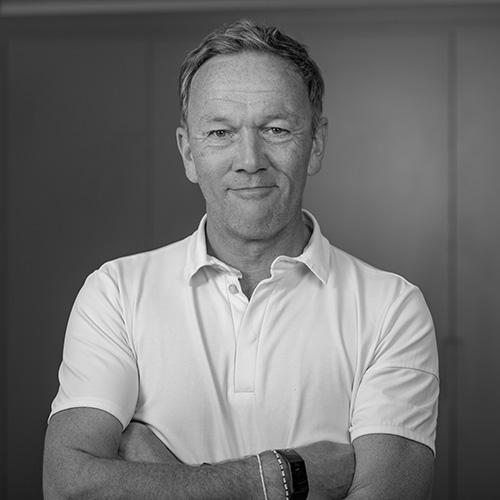


David Taylor spoke to Projekt’s CEO Nick Hartwright about culture’s importance to London and turning old sugar sheds into affordable workspace, film studios and live music facilities at The Factory in the Royal Docks. Oh, and what to do with a load of dead pigeons…
David Taylor: Hello! How are you doing?
David Taylor: Hello! How are you doing?
Nick Hartwright: I’m good, man, are you doing? Are you having a good day?
DT: I’m very good, thank you! I wanted to speak about your project, which has been awarded £2.8 million and is a sort of first example of the Good Growth Fund money coming to regenerate the Royal Docks – and it's called The Factory. Would you like to give us a sort of pithy description of what the project entails and where it came from?
NH: Totally. I’ll give you the headline, elevator pitch. So, The Factory is essentially a workspace project for the Royal Docks in a five-acre site which was formerly part Tate & Lyle’s giant sugar refinery. I first saw the site and thought it would be an interesting workspace proposition for us from the DLR, and then got onto Tate & Lyle and proposed it. And then, because I'm working in the Royal Docks with the teams down there, thought it would be an interesting one to look at GLA funding to help kick start it, and allow us to provide really affordable workplace for local businesses, small businesses, and start-ups coming through.

DT: This is an area that's been almost threatened, I suppose, in London, isn't it, by competing developments, particularly in residential? Am I right in putting it like that?
NH: Yeah, I think so. I mean, we all know the pressure on delivering the amount of resi that we need in London, but what often gets forgotten about, and it’s not a new conversation, is the loss of workspace. And not necessarily the central London, WeWork-type office stuff, but the place where things are made, where people are actually building and creating things. So being able to safeguard that in an area which is charging along with huge new schemes all along the Thames there, I think is really important.
DT: You were also personally behind Green Rooms weren't you? What are the lessons that you've been able to learn on that project that you think might be applicable to this one?
NH: (laughs) Don’t do a hotel would be my first one! No, Green Rooms is a project which is very close to my heart, actually. It's a really important place to engage; the way that local communities use sites that aren't just a parachute drop. So, one of the biggest learning experiences is just that. You know, realizing that it’s as much about local people from areas as people bringing new stuff into areas. I think they’re very different. A High Street hotel with an F&B offer for the arts is quite different to a big industrial state in North Woolwich.

DT: But, by the same token, they are both arts-related, and they are both about affordability, aren't they?
NH: Exactly, sorry, I was just about to say…
DT: Sorry!
NH: …No, it’s absolutely fine. No worries. You’re absolutely right. Everything that we do is I guess slanted towards the creative industries. That’s very broad now – everything from a fine artist through to a web designer or a graphic designer, or whatever. So, it's not a very narrow field as it used to be. And then, absolutely - affordability is key. Our mission is to provide space where businesses can grow or start or have ideas for new things. And that's got to be at a price point that works for people. You know, whether it's an artist coming to stay in London who needs a good but affordable room for example or it’s a manufacturing business that is looking to start doing work. Both of those things are really key to what we do.
DT: So: how do you make it stack up?
NH: Um…(laughs) I make it stack up by working very, very hard to deliver sites for pretty tight Cap Ex budgets. We are very, very good at what we do as far as how we adapt sites and how we change sites to work. We have an amazing team at Projekt that, because we are all employed directly – we have in-house legal, we have in-house design – all that stuff that otherwise we would be going out for…in-house construction. That’s one way that we manage to keep the budgets down. And then it's about having a sort of blended rental business model that helps cross-subsidise things.
So, I’ve got sites in Soho that I have traditional companies in. PR companies, Development companies, investment companies that pay good rents. And that effectively allows me to subsidise projects. Obviously as well with this one in particular, with Factory, having match-funded £2.8 million from the GLA’s Good Growth Fund to add to the money that we are putting into it means that we can invest that Cap Ex without having to run it out and keep the high rents.
So, I’ve got sites in Soho that I have traditional companies in. PR companies, Development companies, investment companies that pay good rents. And that effectively allows me to subsidise projects. Obviously as well with this one in particular, with Factory, having match-funded £2.8 million from the GLA’s Good Growth Fund to add to the money that we are putting into it means that we can invest that Cap Ex without having to run it out and keep the high rents.

DT: The scheme at The Factory also includes a film and TV studios, which I think is sort of linked to a number of others that are being built in Dagenham and elsewhere. How key is that to the scheme? And also, as a subsidiary question, how key is culture and creativity to the future of London going forward, would you say?
NH: Yeah, I mean the second part of that question I’ll answer first. I think you know the creative industries – and again it’s a broad, catch-all kind of term for everything that makes London the interesting vibrant sort of city that it is – comes a lot through that. So, if we don't have those types of spaces and lose out to other European cities, that's going to impact everything, I think. That's really important. For the schemes themselves, the culture is threaded through these from beginning to end. So, whether it's a music studio, a studio space, a rehearsal space, unit parking spaces, all of it has to feed into what we do. What I’ve found is that, by having those aspects of these projects, it also brings other things to it, so people actually like working where a shoot is taking place. Again, it builds on that cultural identity. So, it is really important.
We’re also doing a load of live music rehearsal spaces at The Factory, which I'm really excited about. These are massively underprovided-for in London, so this is for bands, touring bands that are coming over or local home-grown stuff where they’re rehearsing prior to going out. Obviously, nobody's been able to go out for the last year and a half, but fingers crossed we’re near the end of that. Being able to deliver those types of spaces is really exciting as well.
DT: It makes me think of Factory Records when you say that…
NH: Well, if you look, most of the stuff I have is yellow and black as well, so there’s probably some kind of copyright issue there as well… (laughs)
DT: (laughs). Right, there’ll be a legal issue down the line! Well, that's really fascinating. It sounds like a really great project and best of luck to you. I think it's really great.
NH: Oh, thanks! When we have got some of the dead pigeons out, you’ll have to come and take a proper look around David.
DT: I’d love to! What are you going to do with the dead pigeons?
NH: Oh, we've got a big container we put them all in.
DT: Right. So you’re not going to stuff them and give them to a certain artist…?
NH: No, although I have two girls who do taxidermy on one of the sites, so maybe they could live on perhaps (laughs)
DT: (laughs) Magic, thanks for your time!
NH: Not at all. Thanks for the call! Cheers! Bye


Related

News
We talk about ourselves four times more than the people we design for
Amélie Barrau de Backer of OpenAsset explores how putting people’s experiences and emotions at the heart of built enviro...

News
Five Minutes with… MICA: Stuart Cade and Gavin Miller
David Taylor speaks with MICA’s Stuart Cade and Gavin Miller about Rick Mather’s legacy, the National Gallery commission...

News
Five minutes with...Ray Hutchinson
Gilbert-Ash MD Ray Hutchinson explores the thinking behind the contractor’s innovation, cultural projects, staff diversi...
Stay in touch
Upgrade your plan
Choose the right membership for your business
Billing type:
Small Business Membership
£90.00
/month
£995.00
/year

For businesses with 1-20 employees.
Medium Business Membership
£330.00
/month
£3,850.00
/year

For businesses with 21-100 employees.

View options for
Personal membership