New London Architecture
Five Minutes With... Rand Ekman
Monday 17 July 2023
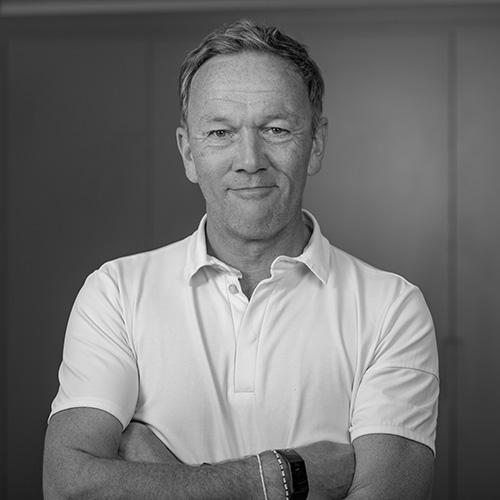

David Taylor meets HKS Partner and Chief Sustainability Officer Rand Ekman to talk through the practice’s achievement of – and tips for – carbon neutrality for corporate emissions, designing earth-friendly airports…and raising chickens.
David Taylor
David Taylor
Hi, Rand. How are you doing?
Rand Ekman
I am great. Really nice to talk to you today.
David Taylor
And you. So firstly, congratulations on your reaching this milestone as a carbon neutral business - and neutrality for corporate emissions, I think it is, isn't it? So, I wondered, firstly, how tough that's been as an undertaking. And secondly, what the methodology behind that is a thirdly, maybe what does it cover essentially?
Rand Ekman
Okay. Good questions that are kind of all tangled amongst each other. So, we've been trying to understand the impact of the work that we do for our clients, as well as the work that it takes to run the business that we are. Two separate questions. The carbon neutral business piece is focused on what it takes the carbon emissions for conducting the global business that we have. We started down that path about, oh, gosh, I'm going to say about five years ago. And I will admit that it was an area that I knew was going to become more and more important for us to understand. But it wasn't in our wheelhouse. It wasn't really about building design, or about delivery of high-performance buildings to our clients. It was about us and the business that we are. So, we did engage a consultant to help us go through the set of issues that we needed to focus in on to utilize a process of determining what matters for us; which of the scope one, two and three criteria were relevant for a professional services firm like we are – a global architecture firm. So that ranges from what it takes to run our offices, to the coming and going of our staff to our offices, commuting; procurement of goods, procurement of services. It's a wide range of things that I would say five years ago, we weren't real informed about. So the process of doing an assessment over a number of years has gotten us to a point where we're really able to understand what it is that our footprint is, take some steps towards reducing that footprint, and then ultimately offsetting and becoming a carbon neutral business. All of that is a sort of a pathway towards eventually being a zero-carbon company. But that's not something we can claim right now, because we're still in the process of assessing reductions and deploying those reduction strategies in the firm. So, you know, I mean, I can keep going, (laughs) or do you have any other detailed questions?
David Taylor
Well, I'm interested because one of my subsidiary questions was going to be: does the calculation also include staff travel? And I think you intimated that it does. So commuting methods. So, the way all your staff get to the office is part of that whole carbon calculation, is it?
Rand Ekman
Yes, it is.
David Taylor
And even if you have a site visit, say? You're based in Chicago, aren't you? And if you have a site visit to a project that's in, say, Hong Kong, do those air miles, as it were, go into that calculation as well?
Rand Ekman
At the moment they do, yes. Our business travel for delivered projects is part of that calculation.
David Taylor
Wow. So that's a really complex calculation, all in? How is that done? That's done on an annual basis? Or how is it calculated?
Rand Ekman
Well, we, (laughs) yeah, so that was a big learning curve, too, because that sort of data was not at our fingertips, as we started to do this. We're much more facile at it now. But at the beginning, it took a little doing to develop the relationships with our finance people, those that are in our accounting, and certain departments that had access to the data that we needed. We fortunately use a business travel service. So, they are able to provide us with data that we could use. That would be a much more complicated calculation if we didn't have that. So, at this point, we're relatively good at getting the information, and the data that we need to be able to understand what the footprint is, and we've moved on to making adjustments in how we operate the business and how we procure services and goods. So that's where we are at the moment; there's lots of ground that we need to cover.
David Taylor
And can I ask a very simple question, which is “why?” Why have you done this?
Rand Ekman
Oh, that's a great question. I mean, you know, there's a number of reasons to do it. And you know, I guess which of the reasons goes on the top of the list kind of shifts around a little bit. You know, one is that it's really the right thing to do. The other is that when we became a carbon neutral business, one of the points that I found very invigorating was that every one of our employees can now walk through the world, talk to clients, talk to people in our industry and say that they work for a carbon neutral business. So there's a point of pride there, as well as the ability to express something that I think is pretty important for addressing climate issues. But underlying the science of climate is the culture of the organization that we work for. And that to me is a big motivator. You know, part of my role; part of my job is to create a more conducive culture for delivering high performance buildings and having the company that you work for do that as well goes a long way.
David Taylor
Sure. And where do you stand on, for instance, designing for clients which are, let's say, not sustainably minded? Might you refuse jobs ever? Oil companies? You know, what are the ethics of this?
Rand Ekman
Yeah. So that does become a topic of discussion. I haven't seen that example that you just described – would we say no to a particular project? I don't know the answer to that, because I don't think we've encountered that directly. We do talk often about our role as designers, pushing the boundaries, and how far we can move things without our clients. I don't know, some clients are engaged, some clients are less engaged. That's just the reality of our business. You can get farther with clients that are engaged, but you can go pretty far with clients that are less engaged. So that is definitely a topic of discussion in the firm. You know, where we fall on that spectrum is different with every project.
David Taylor
One of the tricky typologies is airports, isn't it, in this scenario? For all sorts of reasons. I noticed that you've done an earth-friendly airport in San Francisco with WELL certification. I mean, what about the actual flights is one side of this. But also, could you explain what an earth-friendly airport is?


Rand Ekman
Oh, gosh. SFO. That is a project that we've been involved with for quite a long time. Big team, a lot of delivery questions about how to deliver an environmental net zero project that is largely being directed by airport staff themselves. In that particular instance, the airport does care. And they do have a group of people that is focused on this. That enables us to do the kind of work that we need to do, with far less complication. There were two pieces to that effort. One was focused around sustainability and carbon questions. The other was focused around human health and wellbeing. We were involved with both of those pieces. And we essentially led the health and wellbeing piece of that. There's a lot of crossover between the two topics. But the work that we helped SFO do in particular was related to WELL certification, which is really focused on the passengers and the employees who use the space from a perspective of health and wellbeing.
David Taylor
So, we're just about coming up to time. I noticed, finally, from your resume, you also raise chickens at home...
Rand Ekman
(laughs)
David Taylor
...which seems absolutely appropriate for a chief sustainability officer. I was wondering how that's going?
Rand Ekman
Oh, it's going fine. The chickens are getting a little older. So they're not laying as much as they used to. But you know, we're attached to them...
David Taylor
…Fresh eggs every morning?
Rand Ekman
...We used to get fresh eggs every morning. They're not laying at that level right now right now unfortunately
David Taylor
...but it brings you joy?
Rand Ekman
Yeah (laughs) True.
David Taylor
Well, thank you very much for your time. That was fascinating. And congratulations again for achieving that emissions target. The carbon neutrality is an impressive achievement. Any tips for any other practices, which might want to go the same way? What's your number one tip?
Rand Ekman
Oh, my goodness. Yeah, so I guess my number one tip is: partner. Find people who know things that you might not be comfortable or familiar with, because they're really good to know and it's complicated. Particularly, the determination of offsets and the assessment protocol is complicated. There are great people who have good guidance, so lean into that.
David Taylor
Yeah. Fantastic. Well, Thank you very much for your time – and good luck with the chickens!
Rand Ekman
Thank you, David (laughs)
David Taylor
Thank you; really nice to talk to you, Rand.
Rand Ekman
Take care.
Share this news


Recent

News
Five minutes with… Leigh Johnson
David Taylor meets Leigh Johnson, managing director of Barking Riverside, to quiz her over the 20,000 homes project and...

News
Winning Design Announced for 'Hope in the Square' Competition
NLA in partnership with the London Borough of Southwark are proud to unveil the winning design of our 'Hope in the Squar...

News
Our partnership with ActionFunder to deliver measurable social value
NLA and ActionFunder partner to give London’s built environment sector a scalable way to deliver and prove community imp...
Stay in touch
Upgrade your plan
Choose the right membership for your business
Billing type:
Small Business Membership
£90.00
/month
£995.00
/year

For businesses with 1-20 employees.
Medium Business Membership
£330.00
/month
£3,850.00
/year

For businesses with 21-100 employees.

View options for
Personal membership