New London Architecture
Five minutes with Rob Fiehn
Tuesday 01 August 2023
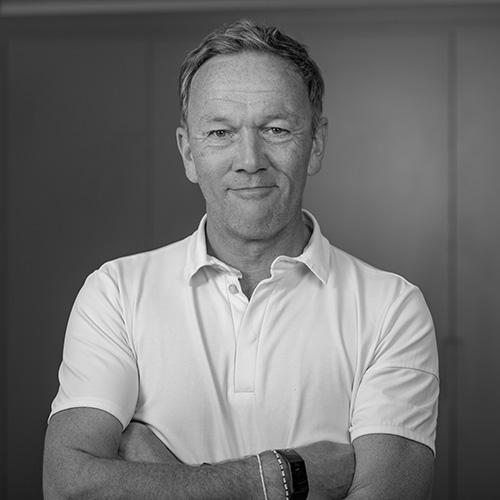

David Taylor catches up with new London Society director Rob Fiehn to ask about his new role, his hopes for the organisation, and the key ideas behind the society’s new book: ‘London of the future’.
David Taylor
David Taylor
Hi, Rob. How are you doing?
Rob Fiehn
I'm really good. Hi, David.
David Taylor
Good. I wanted to congratulate you, first of all, on your new role as a director of the London Society....
Rob Fiehn
Thank you very much!
David Taylor
...but also, to ask you to put into words, for people who don't know it who'll be reading this, what the society actually is, what it stands for and what it hopes to do: three things!
Rob Fiehn
Well, the society is and was the same thing, and also two different things. It is now very much a membership organization focused on the past, present, and future of London. It started off as one of the early civic societies in London, by a group of luminaries at the time, who just wanted to do what they could to improve the city, and they were quite radical and progressive. And I think we still hold on to those aims and want to do the same thing today.
David Taylor
What are your own personal goals for the society? I'll come back to the radical side of things in a bit when we hopefully discuss 'London, the future' - the book that you've just published. But what are your own personal goals for the society?
Rob Fiehn
I am a born and bred Londoner. And there is so much that I don't know about my own city. You know, I've lived briefly abroad, but primarily I've been in London my whole life. And I just think there is so much to inform, celebrate, point people in the direction of, discover things, and I want the London Society to be at the centre of that. And although we are a built environment organization, that means we end up touching upon everything in terms of culture and, you know, sport, faith, transport, housing, health and wellbeing, the environment. I mean, architecture kind of is everything.
David Taylor
That's interesting, because, obviously I do a lot of work for NLA and that sounds quite a lot like what a lot of the NLA does as well. And there are obviously lots of other urban realm organizations and institutions that sort of tread similar grounds. Firstly, what is the USP of the society vis a vis those other groups? And secondly, I think you mentioned or intimated in one of your first tweets that you'd like, as part of your reign, as it were, to be more collaborative with the other built environment institutions. So if that's true, how is that going? And what form will that take?
Rob Fiehn
I think there is a lot of overlap between all the built environment organizations. And I think that's fine. Because I think drawing hard borders isn't the answer to explaining the built environment. However, I think the London Society is more public-facing than NLA. But it probably involves more professionals than something like Open City. And it is quite interested in the past, and how the past relates to the future, which might overlap with something like SAVE or the 20th Century Society. So, I think it falls into this weird public niche, with professionally-led people basically trying to demystify how London is planned, how it is built, and the people of different communities it serves. So it does fall into this gap, which I'm really happy with. But as you said, there are all these other amazing built environment organizations. And if we can team up, we can share ideas, maybe even some resources, put on events together, I don't think we need to be competing with one another. And I think we can carve out our own little furrows, but also share them and support one another.
David Taylor
David Taylor
Do you think there has been a bit of a resistance to collaborating amongst some of the organizations that you've mentioned, in the past?
Rob Fiehn
I don't think there's been resistance. I think there's been a lack of resources. And I think a lot of the problem is, even with a well-funded organization, like the NLA, you're doing so much that, you know, staff time and money and everything is limited, right? It's finite. And I think there are other organizations, you know, as small as the London Society, just can't even spend the headspace to think about collaboration. They're just trying to achieve some small goals. But I think with a very little bit of effort, and I know that others are leading this charge well, it's not just us – I think we can come together and I think there's been a change of attitude. You know, maybe it's a post-COVID thing. I think everyone's just happy to rely upon one another a bit more. Share a bit more information. There's lots of these weird positives that have come out of that terrible time. And I think we might as well take advantage of those.
David Taylor
Now, you mentioned being radical as one of the things that the society has had a long tradition of being. And I noted in the intro written by Peter Murray to your book to the latest iteration of the first book that was published in 1921, he referred back to that earlier book, and he mentioned that it had some radical suggestions. And one of them that really caused my eyebrows to go up and down a bit was the one from Lord Montague of Beaulieu, who advocated creating airports over parks with, and I quote, 'say, a winter garden underneath'. Just from a quick flick through the book, I didn't see quite the same radicalism, in terms of ideas and suggestions for concrete or firm suggestions of built product for the city or built solutions? I mean, maybe I'm missing some of them in the book. But would you say it is less radical than the first issue of the book?


Rob Fiehn
I think it depends on your definition of radical. So, when we were getting participants to join with the book, rather than going out with an agenda to say, we want this person to talk about a large capital project, we just approached people who we knew were really top-notch in their field. And we left it up to them. And we said that it was about the future. They could be as Utopian or dystopian as they wanted. We just wanted their honest opinions. And it just seems that those large visions for singular projects are quite out of date now. And actually, as Indy Johar points out in the book, we don't have the carbon budget to do this stuff. So that means that our thinking completely has to change. And we have to look at what Smith Mordak calls infrastructure. They don't mean just transport – they mean the making of all of the processes and the systems that go into the built environment. Sarah Ichioka talks about huge public greenways and using natural systems to filter water and to shade occupants in an overheating environment. So, in a way, you're talking about really radical stuff, not just building an airport, or a park. You're talking about changing the very nature of how the system works, the city works, with one another. So I'd say you could argue that it's more radical. I mean, Indy is talking about human behaviours, and how that changes urban fabric. Baroness Lawrence is talking about changing systems of governance...
David Taylor
…I thought that was brilliant, that one, by the way. Beautifully written...
Rob Fiehn
…Yeah. So I think in a way I would argue that we're coming at it from a place where lots of radical ideas have been proposed already, which maybe the 1921 edition didn't have to grapple with. But we're using that awareness. I think we're coming up with a bolder vision. And I hope that we can, once the book is published, we can show it to the right people and bring them along.
David Taylor
My last question on the book, I suppose – and again, I could be failing because I haven't read every single word – but I didn't see much, from a skim-read, on transport, which looked like an omission to me, given the importance of transport in all sorts of scales, to a city like London. So: a) am I missing something in the book or b), is that a hole you thought might have been there?
Rob Fiehn
I think, again, it comes down to the fact that, rather than treating transport as a separate entity - it's a bit like, we don't have a chapter on retrofit, but both transport and retrofit crop up in so many chapters. And I think the general acceptance is that we need to move towards a city that has better public transport, and therefore no cars. I mean, getting rid of cars comes up a few times. You know, that we need to...
David Taylor
...not with our prime minister, though...
Rob Fiehn
(laughs) Yeah, I mean, very pertinent now! That we need to be focusing on active travel, but we need it to be focusing on ensuring... I mean, the High Streets chapter by Mark Brearley is really great. He rejects the idea of the 15-minute city, but he basically says the entire city could be a network of high streets, and therefore, wherever you're walking or cycling, you've got everything you need. And that supports a local and city-wide economy. So, I think it's true to say that we don't propose new train stations or airports or big lines connecting up the country to London, because they're sort of already out there. I think what we're doing is talking about integrating that into the fabric of the city in a more sustainable and holistic way.
David Taylor
So, my very last question is, what is your favourite idea or notion from the book? What was the one nugget from the book or form of thinking that you think is the first thing that comes to your mind when you think of the book and – presumably – how proud you are of it?
Rob Fiehn
I think I keep coming back to Indy Johar, just because the things he says are very radical, and sometimes quite hard to read and comprehend. But if you spend a little bit of time letting it permeate into your brain, you sort of take it in chunks, you realize that the scale of what we could achieve is at our fingertips. I mean, in a way, Indy says that none of the things that he suggests are new ideas. They're not created by him. But what he's drawing upon is some really radical ideas and research and applying them to London. He's mixing AI, face to face contact, you know, communities, better quality of living. Even thinking about the pollutive particulates in the air that we breathe. You know, he's going from the sort of microscopic to the macro. And I just think we need more of that thinking.
David Taylor
Brilliant. Thank you very much, Rob. And congratulations on the new role and the book, which I shall now read more fully, starting with that chapter first, I think. So Thanks again,
Rob Fiehn
It's a broad range of voices and opinions! But I think that eclecticism is how we could honour the original book.
David Taylor
Magic. Thanks, Rob.
Rob Fiehn
Thanks so much, David.
Share this news


Recent

News
Five minutes with... Adam Green
David Taylor catches up with Ninety Four Group founder Adam Green on his first MIPIM, sharing reflections on the experie...

News
The Wren: What next for the Members?
Brett Warburton-Smith, explores Wren’s wind-down and how post-Grenfell risk, liability and insurance pressures are resha...

News
Rethinking the London View Management Framework
John Walker explores whether the London View Management Framework still supports growth, considering how it could evolve...
Stay in touch
Upgrade your plan
Choose the right membership for your business
Billing type:
Small Business Membership
£90.00
/month
£995.00
/year

For businesses with 1-20 employees.
Medium Business Membership
£330.00
/month
£3,850.00
/year

For businesses with 21-100 employees.

View options for
Personal membership