New London Architecture
Five minutes with... Rob Naybour
Tuesday 31 May 2022
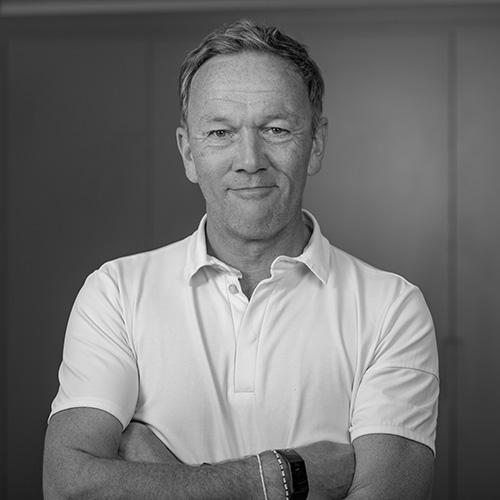


David Taylor catches up with Weston Williamson+Partners CEO Rob Naybour to chat through the transformational work his practice has completed on two of the key Elizabeth Line stations – Paddington and Woolwich. And what is coming down the line next…
David Taylor
David Taylor
Hi, Rob! Thanks for sparing me some time about the Elizabeth Line and principally about your two key projects, Paddington and Woolwich. You must feel, in the week that it's opened, like you've almost given birth! Is that something like you're feeling this week?
Rob Naybour
I wouldn't be able to know what that's like! (laughs) Look, these are enormous, long projects. The last two years has probably been testing and commissioning, mainly. The Involvement for us has been kind of small. So, if it is in any way, like giving birth, it's like giving birth to... you almost forget about the project, is what I'm saying. Your day-to-day life moves on enormously. So it is interesting; you’re reminded about all of this, and then you meet a lot of people that you've worked with over the past – well, It's probably about 15 years, I think, Paddington.
David Taylor
But you must have done quite a fair bit of press on it on the day, did you?
Rob Naybour
Um. In the lead up to, yes. Not much on the day and a little bit afterwards. But there's a lot of people talking about it, obviously. These are huge collaborative teams. So, there's multiple stories. It's not just an architectural story. There's lots of interest for lots of reasons - and for good reasons.
David Taylor
And with Paddington, what was the key challenge? Was it all the 'mess' and all the level changes? Was it the complexity?
Rob Naybour
Yeah, good question. We started at Paddington long before the Crossrail station on the other side with the Paddington Integrated Project, as it was, and all the taxi works. And the Hammersmith and City Line station, and so on. And I think the big challenge was just getting to grips with the complexity of the different parties, the desire for everybody to get their own piece. But this station was really in a very poor state, and to pull all these various aspirations together, and kind of yeah, the usual, I suppose the architects' challenge is to come up with a vision that everybody, and all of those parties, and all of the technical teams buy into and embraces all of the technical challenges within all of the constraints. That's probably a sweeping summary of the big challenge.
David Taylor
And is there a favourite element that you have of the scheme? Or is it simply, say, the treatment of light, or the permeability? Or what would it be?
Rob Naybour
For me these projects are about the passenger experience. And I think the key to passenger experience is the spatial experience. There's lots of other things - there's, you know, the elements, the materials that you touch, and so on, the ticket machines and lots of detailed elements. But for me, the key to the passenger experience is getting the spatial experience right. And I think that spatial experience on the Crossrail station, for me works really well. You come from this great interior, through the Eastbourne Terrace buildings, which is a narrow little opening and out into another big space, which opens into the concourse space, which is underground, but still another big space. And then feeds down onto the platforms, and all of those spaces are linked. And I think for me, that's a very satisfying kind of passenger experience, an experience of using the station.


David Taylor
And if we turn to the very different kettle of fish, which is Woolwich: similar questions. What were the key challenges there? It was much more of a historic environment in terms of its immediate surroundings, and drawing inspiration from its maritime history, was it? Was there more to do there in that respect?
Rob Naybour
It's similar challenges: similar but different.
David Taylor
Yeah.
Rob Naybour
Because there was never a station. So we began work for Berkeley homes. And that was really a design exercise, which was around lobbying for a station. We began working for Berkeley homes, London Borough of Greenwich, and Crossrail. And it was about exploring the possibility of there being a station there, and how it linked with development. Then we worked for Crossrail; Berkeley Homes, meanwhile, built the station box. And it wasn't clear we were actually going to fit the box out. So, there was a lot of design interaction between the masterplan and the fit-out and the box. Probably sounds all a bit technical, but that was the big challenge. I think in terms of the historic environment at Woolwich, it's a sensitive environment. But there was such enthusiasm from the locality for actually getting a station there, so that probably was a secondary challenge,
David Taylor
Because of its connectivity benefits?
Rob Naybour
Because it gave such a lot to such a sort of forgotten area of London, really,
David Taylor
Yeah.
Rob Naybour
There was enormous support for actually achieving the station there. So, in some ways, although it's a sensitive, historic environment, and all of those things, there was such a broad church of support for the principle of the station. Everybody was open to a dialogue. Everybody was open to a sort of constructive dialogue about how we achieve it, and how we do what's best for the site.
David Taylor
Which brings me on to the macro question about your beliefs about what Crossrail or the Elizabeth Line will do to London? Do you have an opinion there?
Rob Naybour
Yeah, I suppose you don't really see it at the moment. At the moment, people are focusing on stations and the architecture and the design and the immediate experience. But I think regionally it sort of extends London. You know, you're going to be able to take a train through Paddington and up to Reading, obviously, on to Heathrow as well. And, of course, once you've got this principle of mainline trains running through the middle of London, then you can run trains from lots of places. You can increase the connectivity. So, it's a much bigger region. It's not really a London project, in that sense. The project enables a much wider regional regeneration connectivity, which I think is a big change for London.
David Taylor
Yeah. So, which of the other stations that you have visited do you admire, and why?
Rob Naybour
So I think with each of the stations, the tunnel environment is fantastic. That was done by Grimshaw Maynard as part of the Atkins team. I think they have done a superb job. The tunnel environments of the central stations are universally fantastic. The work that's been done on them is really well done and I think it's a fantastic experience. And it's superbly elegant in its design and implementation. Funnily enough, we didn't have anything to do with that team because our stations are box stations, and they are different types of space. But I think all of those total environments are pretty amazing. Pretty an overused word, but they are iconic. Yeah. And then I think the station which stands out to me, that works best with those, is Tottenham Court Road. I think the boldness and simplicity of the lighting from the big drum lights, I think complements that kind of industrial chic of the work by Grimshaw.
David Taylor
Well, very last question. Because we're just out of time, but what's next for you? In terms of other similar projects? If there are any similar?
Rob Naybour
Well, actually we've got another project of similar scale being constructed at the moment in Melbourne. There we're doing all five stations. And those stations are even bigger and more generous, and I think in some ways more spatially dramatic than stations on Crossrail. So that'll be interesting. And I think, you know, we've just become part of a much bigger architectural group…
David Taylor
Egis?
Rob Naybour
Yeah…And so we see there's opportunities for these sorts of schemes.
David Taylor
For other cities?
Rob Naybour
Yeah. Other cities, other locations. Other geographies.
David Taylor
Good. Well, I'm assuming Brighton, where I'm phoning from, is not one of those but that maybe other capital cities across the world you're looking into elsewhere, are? Europe? The other side of the world?
Rob Naybour
Yeah, Europe. I mean, Paris is doing the same. We're not working on that, but Paris is doing another big scheme: Grand Paris is perhaps even more ambitious than Crossrail, actually.
David Taylor
I felt Crossrail had a bit of an RER feel to it, actually, as a traveller.
Rob Naybour
Yeah, this idea of running big mainline trains through the city. I don't know, the railway people say it's not the same, but actually, you know, for me, it feels the same. It feels very similar, and I don't understand exactly what the differences are, but...
David Taylor
So not like a tube, in other words...
Rob Naybour
Yeah. Proper trains that can come from really anywhere and run through the city. But it's not just capital cities. But that's similar to what what's what we're doing in Melbourne, and it's similar to most of the larger schemes that we're doing internationally.
David Taylor
Yeah. Well, good luck on doing some more of those. And congratulations again on the birth of your baby! Or babies! They're not twins; they're siblings, aren't they?
Rob Naybour
Yeah, look, if you're going to use that, then I would just like to recognize…I wouldn't like to put myself forward as the mother. I think I was the father of this one. There were plenty of other people who went through the pain of birth, I had a somewhat paternal role on this one! (laughs)
David Taylor
Okay. Magic. Thank you very much for your time and yeah, congratulations again, Rob.
Rob Naybour
No, You're welcome. Thanks a lot.
David Taylor
Thanks. See you soon.
Rob Naybour
Cheers. Bye.
Share this news


Recent

News
Five minutes with... Nathan Spencer
David speaks with UKREiiF director Nathan Spencer on this year’s show, global growth, investment outlook and key highlig...

News
Can we enhance viability through enhanced communication?
Graham McCormick of Hayes Davidson explores how early-stage visual communication can unlock project viability, reduce ri...

News
Making Retrofit the Default, Not the Exception
Sarah Peterson from Atelier Ten explores how retrofit can become the default, with early insight and design helping unlo...
Stay in touch
Upgrade your plan
Choose the right membership for your business
Billing type:
Small Business Membership
£90.00
/month
£995.00
/year

For businesses with 1-20 employees.
Medium Business Membership
£330.00
/month
£3,850.00
/year

For businesses with 21-100 employees.

View options for
Personal membership