New London Architecture
Five minutes with... Roger Hawkins
Wednesday 17 June 2020
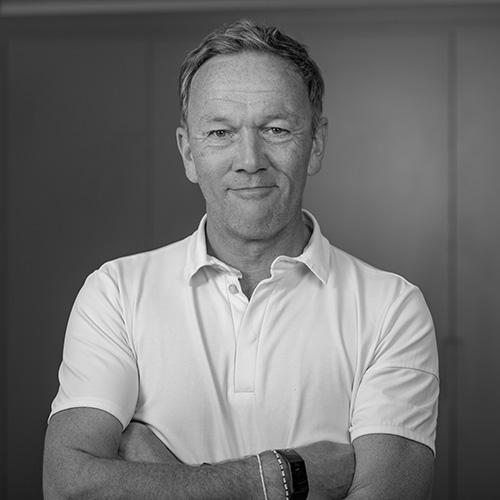

‘Architects listen to respond, rather than to understand’ - David Taylor catches up with Hawkins/Brown director Roger Hawkins, back in the practice’s City of London office, about Grenfell, the difficulty of being creative on Teams, how architects must earn a louder voice in the recovery, being a mayoral design advocate, cycling, and how the high street zoned for retail is dead.
David Taylor: Hi, Roger! How have you been?
David Taylor: Hi, Roger! How have you been?
Roger Hawkins: Hi! Well, a bit like you, really, in that it’s been interesting to walk around and get to know bits of the local area and find places I’ve never known existed. And, you know, just getting used to working from home and dealing with progressing design and talking to people via Microsoft Teams as much as possible. It's amazing how resilient the whole office has become, working like that.
DT: And you’ve shifted, I hear, from allocating resources geographically as a practice to more in terms of skills and capacity because of that. Is that right?
RH: I wouldn’t say becauseof that. I would say it’s part of the process of how we resource projects. We tend to have different people working on a number of different projects – it’s quite common in our office to have someone working on a residential project, on a commercial workplace project, we can share those skills around. I think what Teams has allowed us to do is to resource more dynamically. We have an office in Edinburgh and in Manchester and we were finding that it was sometimes difficult to get hold of people but now the whole office is speaking on Microsoft Teams. They’re very well connected and we’re working on stuff in California at the moment, out of the London office.
DT: So: it's been a bit of a shift, but something you were sort of already doing anyway then, but it's allowed more efficiency as an upside?
RH: I think it's just reminded us that we can communicate efficiently across the offices using Teams.
DT: And how about ideas? Are ideas as easy to stimulate across Teams as they are with face-to-face?
RH: I think perhaps not. I think that creativity is the one thing we do miss. We did a survey of everyone in the office and that's the one thing that they were missing. There are some tools you can use – you can share screens and use Sketch and share sketches across Teams. We have done Teams meetings with just two people, we've done them with a small group of 6 or 10 and we’ve done them with the whole office, so nearly 300 people sharing. So it is quite a resilient platform. But creativity is something I think you have to carve out if you don't have that face-to-face contact.
DT: Do you think the built environment has a loud enough voice? Which I think is sort of pertinent for this period, especially because the built environment sector and the professions are going to be so charged with helping the recovery? What do you think about that voice, currently?
RH: I think it's difficult for architects just to moan that they don't have a voice – I think they’ve got to go out and earn a voice. I think there are people in our profession seeking to do that. One of the things we’re keen to do is listen to people - I think traditionally architects don't listen very well. They listen to respond rather than listen to understand. Getting to that level of understanding and having opinions which can be shared and are sensible I think is something that, as a profession, we need to do. And the more we do that, the more voice we will gain.
DT: How have you found the process of being one of the mayor's design advisory group (Mayoral Design Advocates) on that score?
RH: It works as an adjunct to planning really. I’ve personally been involved with design review, which is quite an interesting process. I think projects have benefited from that mayoral design inputs and often the advice we’ve given is not just based on the appearance of buildings. It is more about use and context. You're making sure that the voice of the local community is being listened to by developers. So I do think that the design advisor position has been quite positive in that design review process. I think that other people who are mayoral design advocates have promoted interesting areas of study. People are looking at the reuse of high streets, post-COVID; we're getting streets back into use. I think we understand that retail is not the solution to high streets; we have to find ways in which they are brought back into use in an environment where we're going to have to be more mindful of air quality and social distancing and it seems sensible to get high streets being used for circulation rather than forcing people into confined spaces. Whether that's walking or cycling, or just using their outdoor space more efficiently.
DT: I was thinking this morning when I was listening to the news about all the non-essential shops opening today about whether or not there was anything that I could have not bought online and had delivered and I couldn't think of anything. It made me also think about the future of the High Street and, as you quite rightly say, about retail’s place in it. If you were to look in your crystal ball five years hence, what do you think the High Street will be like? Will we havea High Street?
RH: I mean, I hope it's a viable place, and I think it could be. So, if I'm looking into my rose-tintedcrystal ball…
DT: (laughs)
RH: …I'd like to see there's a place where communities come together, whether that's social interaction or other community uses. I don't see why libraries couldn't have a place for people to share experiences and job clubs and places to learn new skills. I don’t see why there couldn’t be training and education based on high streets. I don't see why people shouldn't be living more on high streets - you know, creating them to be vibrant places throughout the day and evening. There’s been a campaign for years for the space above shops to be used, but actually it should be more than that - it could be whole areas of streets that could become more mixed use. It seems to me that what we are doing in London at the moment is actually embracing mixed use as an idea, rather than having places zoned, and that traditional notion of a High Street to be zoned for retail I think is history. The High Street needs to be a place for a whole variety of uses to coexist.
DT: Obviously, it was three years since the terrible tragedy of Grenfell yesterday (Sunday), which made me also think about your role on RIBA insurance: I think you're on one of those panels, aren't you? Beside the obvious human tragedy, to what degree has the architecture profession been hit in terms of insurance, etc, and how is that playing out in your experience?
RH: Insurance is a tricky area for anyone involved in building; not just architects - engineers and tractors are facing remarkable hikes in premiums. I think that's a natural response to not just Grenfell - there have been other fires where there's been considerable loss and insurance companies have taken significant hits on total loss of buildings. So I think it's a reminder, and Grenfell was an awful tragedy, obviously, but I think that the insurance markets at the moment seeking to increase premiums is a useful reminder of the role which we as architects and other people involved in the built environment played. There is a lot of responsibility in how you put up a building. You need to do it properly. You need to consider things very carefully, and I think one of the frustrations I've had in recent years is that the voice of the architects, going back to your earlier question, has not really been listened to. We’ve been selecting materials for building based on cost rather than on performance, and we should be using our professional judgement to advise on better quality materials, whether it's for fire safety or whether it's actually for sustainability and environmental performance.
I think it's worrying at the moment that proposed changes in building regulations are actually reducing the quality of external fabric and insulation because they claim by using clean, efficient energy sources of electricity with air source heat pumps etc you're making efficient buildings, and therefore you can offset that against insulation policy. Well, that is poor and short-term thinking. We need to be building good quality buildings that last longer, I think, and which work better. And fire safety is a key part of that. So, we as professionals involved in helping design teams move forward need to be made to be aware of our responsibilities.
DT: One very last question. I know you saw Peter (Murray)’s pre-release video of the 2013 Portland (Oregon) to Portland (Place) bike ride that you and I went on in different segments seven years ago. What did that make you feel? Did you have a yearning for wide open spaces and release?
RH: I really enjoyed cycling across the States. I was lucky enough to fly out to Minneapolis and cycle to New York, which is just about 2,000 miles in a month. And that opportunity of freedom and just seeing places and meeting people, discussing the future of cycling in an urban environment which is what we did by meeting transport commissioners in various cities along the way, doing a bit of research as we went, was a reminder, actually, of the importance of not only getting out on a bike and cycling - which I've been able to do ground rural Hertfordshire - but actually just getting out and meeting people there and discussing the future of our cities together.
DT: Pretty pertinent now!
RG: Very much so
DT: Thanks Roger, that's great.
Share this news


Recent

News
Five minutes with… Leigh Johnson
David Taylor meets Leigh Johnson, managing director of Barking Riverside, to quiz her over the 20,000 homes project and...

News
Winning Design Announced for 'Hope in the Square' Competition
NLA in partnership with the London Borough of Southwark are proud to unveil the winning design of our 'Hope in the Squar...

News
Our partnership with ActionFunder to deliver measurable social value
NLA and ActionFunder partner to give London’s built environment sector a scalable way to deliver and prove community imp...
Stay in touch
Upgrade your plan
Choose the right membership for your business
Billing type:
Small Business Membership
£90.00
/month
£995.00
/year

For businesses with 1-20 employees.
Medium Business Membership
£330.00
/month
£3,850.00
/year

For businesses with 21-100 employees.

View options for
Personal membership