New London Architecture
Five minutes with… Ros Goode, Principal and Regional Managing Director – London, Avison Young
Friday 06 November 2020
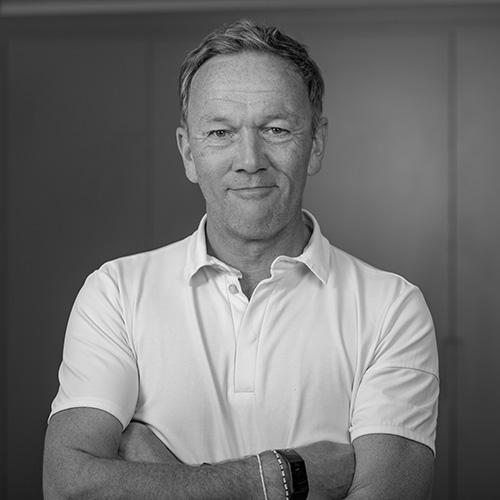

David Taylor talks to Ros Goode, principal and regional managing director – London at Avison Young about the firm’s UK Cities Recovery Index. What is it all about; how is London doing, relative to other cities nationwide; and what are her predictions for the road to recovery in the capital?
David Taylor: Hi Ros, how are you?
Ros Goode: Good morning! It’s a sunny morning, looking outside!
DT: Same here, down in sunny Brighton!
So: thanks very much for this. I've been zipping through your UK Cities Recovery Index online and I have to say I do find it very interesting. But I wondered if you could describe what it is, in broad terms, for our readers?
RG: Sure. Well, firstly I'm hoping your readers are going to want to have a look at it themselves, and if they just do a Google search, they will find UK Cities Recovery Index at the top of the searches. It's definitely one that we are keen for the market to engage with and take a look at, because we see it as something that we've developed as a support and assistance to the market.
Just to context it for you, David, we saw ourselves back in March with the impact of the pandemic; stock markets, real estate, construction – everything getting into a tailspin in terms of a downward trajectory, very rapidly. Clearly in terms of us as a real estate advisory business supporting our clients, we were in very much a place of: what do we need to be doing to really support what's going on? And deliver up intelligence that's going to be of value.
So we started doing transactional weekly meetings with all our transactional colleagues because we are very multi-faceted consultancy, as you'll know, in terms of all the markets that we cover. We were creating low level evidence-based forecasts which we were trying to start to analyse. And overlaying on that, looking at a number of high frequency indicators that were being published – so footfall, flight data, nitrogen dioxide levels from an environment point of view. And we started to plug this into our regular reporting, into our client base. But we recognised that it is all fairly vanilla?
DT: Yeah
RG: So in bringing this UK Cities Recovery Index to the table, we weren't looking at it as a direct measuring of real state, but really wanted to help us all understand in a market where there isn't a market, what the drivers are that are influencing real estate now and going forward.
You've had a look at the website and the nature of what we're producing, so using February as a date for the sort of normal behaviours in the market, we have in effect monitored various high frequency indicators at local and national level so that we can create a series of sector indices. Breaking it down, what we are trying to demonstrate is commercial activity. So that will be business sentiment and employment numbers; return to office, trying to show commuting patterns and monitoring office occupancy; and then breaking it down into retail, footfall, shop visits and again consumer confidence. Hotels and leisure as you'd expect; restaurants, pubs, bars, cinemas. Mobility, so foot, air, train, and then residential.
So we've sought to create this database with data coming from multiple sources. That would be anything from Highways England to Flight Radar to Open Table to Zoopla…
DT: Can I just interrupt you there? So there's lots of different indices here, and obviously graphs haven't got a very good reputation after the recent press conference from the government! But, having looked at some of these graphs, it looks like London is suffering as you might imagine on footfall - it's I think 22% below the national average as of 18th of October. But it looks like a slight glimmer of light is in the residential market, and everything else is pretty tricky. Is that a fair summary and if not, how would you characterise London at this precise moment?
RG: In terms of characterising London, I think you're summing it up very well. We have been tracking behind in terms of the return to office, but I don't think that surprises any of us around the commute challenges that we've got. And clearly the international reliance of international visitors that we have in a business environment equally to leisure and hotels, etcetera. So yes, I mean the residential has bucked the trend because of the impetus that the government has put behind it into Stamp Duty agendas.
There’s a pent-up demand there in terms of the market lag. Clearly, the retail is a very significant casualty. Frustratingly, David, as you can see from the chart, the London return to office was actually up-ticking from September onwards. We were seeing encouraging signs…
DT: Yeah
RG: …And that makes it all the more frustrating that we find ourselves now with London which will be so impacted by the latest lockdown.
DT: I suppose you're predicting ‘Lockdown 2’ to present a downward tick in most areas. You've got 10 cities here. How were they selected and were there any surprises in any of the performances from any of those cities vis a vis London?

RH: We are tracking the cities that we are represented in, and we are represented in the key cities around the UK, so the idea has been to give it sensible coverage. Has it delivered any surprises? Certainly, from my regional colleagues’ perspectives, David, they are very encouraged to see the relative encouraging signs that each of those regional cities have had, which clearly have now been somewhat challenged again by the localised lockdowns.
But I think what's interesting is how this second lockdown clearly will have an impact, but whether it will have as significant impact because we know so much more about Covid, and the impact of Covid on society from a health perspective. Beyond the month period that we have got, I think what would be very interesting to see is what we get - we have got to be the other side of Christmas realistically David haven't we, because of year end and Christmas looming so soon.
But quite what the New Year brings in terms of a vaccine on horizons as is being reported Boris promising us on Saturday night that we're going to be getting enhanced testing and tracking tracing…
DT: (laughs) yeah…
RG: We need that sentiment shift, David. We need that sentiment shift.
DT: So, difficult crystal ball question, then, in terms of the next six months for the capital. What do you think these graphs will show over that next six month period and also as a subsidiary, associated question to that, what do you think full recovery will look like?
RG: (laughs) And, as importantly, when!
DT: Yeah!
RG: This such a vaccine or no vaccine question.
When I say that, I think we all recognise that a vaccine isn't going to be a silver bullet because all the medical advice is telling us that it won't be a tick in the box and move on. And we have the whole issue of rolling out the vaccine once we've got one. But I think from the point of view of where we are with the next six months, if we are to find ourselves with a vaccine, regardless of the fact we haven't rolled it out, I think it will generate an immediate sentiment shift. Because we haven't had a horizon of a form of exit from this at all this year.
So, everything that we've been seeing from a market response has been reflective of that – i.e. uncertainty, uncertainty uncertainty. If we have the vaccine, I think you will have all sectors feeling more confident about making decisions in terms of what their business is going to do. And to the extent of having the vaccine – let's call it early in the new year – then I think we will see from a Cities Recovery Index point of view, all those markers improved notably, because there will be a re-establishing of confidence.
In the absence of a vaccine, I think – and there's a lot about the narrative here of living with this. Because the politicians are relying on a vaccine, I think business has tended to follow suit. If we have a change of narrative that says okay, the vaccine isn't going to be with us, but we have to be working with this better, we've got track and tracing that's better, we've got testing that's better, then there's an emerging confidence that will run with that, David.
But the trajectories will by definition be less marked, because we don't have that vaccine, which is perception. There's a lot about perception around a vaccine for me. The perception and reality don't necessarily need to be the same, because there will be a perspective of it being a turning point, which we don't have at the moment.
DT: Are you optimistic?
RG: I am eternally optimistic, David…
DT: (laughs)
RG: …because I think we are in a really pivotal moment where mental health is concerned, across all business environments. I'm old enough to have done Global Financial (Crisis). It's not the same, David, but in the sense of: it's something that we will get beyond, and I think we all plan for the worst and hope for the best. And the fact is, we will get to the other side of this, and I think it will be in the course of 2021 that we will turn the corner. But I think that in the short term it's very important to focus people on the other side of it and create the hook, which I think is what the government is trying to do around the vaccine.
Our business focus is very much looking after our people. Making our people safe and secure and nurturing them through the difficult dark days of winter - short days, miserable weather. You know, it’s a very different perspective from March, when we thought we'd be out of this by the summer. People have got to recalibrate. And recalibrate with Boris telling us that we're going to be in for a difficult period of months.
So, there's a lot for people to get their heads round at the moment. But the flipside of that - I’ve been spending a lot of time on Zoom calls, like the rest of the world – (is) what I'm participating in, though. I came off a call yesterday with the recovery board that the GLA pulled together, with many stakeholders in conversation. And what is really good to see is the collaborative behaviours that we're seeing across local authorities and business; all those bodies that circulate around London, like CBI regional representation, Future of London, London First, London and Partners. You know, all these organisations that are focused on making London progressive and trying to address all of these things. There's a real spirit of collaboration; that people are wanting to give up their time to really look at all the challenges that London is facing, and how we should be tackling them.
I was part of a Future of the High Streets conversation. We had everyone from Legal and General there, from Enfield Council, to GLA to various other borough representatives – just everyone wanting to put their minds together and really look at the horizonal impacts of this, and how we should be responding to it in the sense of calls to action. Covid is accelerating so many things in the real estate environment; retail most manifestly, because we're on a difficult journey. And my goodness me when you look at the stats! We're talking about 2,000 stores affected in 2019, 4,200 stores affected so far in 2020. Doubling. So, they are scary numbers…
DT: Well, you’re depressing me again so we need to get back to optimism! (laughs)
RG: (laughs)
DT: Leave me with one more optimistic, tiny thought.
RG: I gave you the stats but I think the optimistic side of that is: we're actually losing a lot of all homogenous operators in the market with multiple units in multiple locations that you and I will have always shopped in and gone ‘God, this is a one-dimensional shopping centre that looks like the same one in the next borough, the next borough, and the next borough. And actually, what we're going to have is those are going to be largely removed, and we're going to find ourselves with a far more interesting, creative, High Street environment of mixed uses that will encompass more quasi-commercial, industrial and next-to-retail. You know, these small businesses and independents.
So, you know I’m optimistic. I'm optimistic because I think we are innately innovative as people, and it's more about designing it to accommodate, than feeling depressed about empty shops that aren't going to go anywhere.
DT: Magic. Right, I’m going to end it there, because that's a very good up note to finish on. So, thank you very much Ros, for your time and I hope these graphs show an upward tick, after Christmas, probably…
RG: Well, keep an eye on them, David. They have certainly been very well received by public and private sector clients in terms of something to wrap around their own conversations of trying to use them to direct areas of focus. It’s serving its purpose! Really good to speak to you!
DT: Thanks very much! See you!
RG: Cheerio!
The UK Cities Recovery Index is at : https://www.avisonyoung.co.uk/en_GB/ukcitiesrecoveryindex
Share this news


Recent

News
Five minutes with… Leigh Johnson
David Taylor meets Leigh Johnson, managing director of Barking Riverside, to quiz her over the 20,000 homes project and...

News
Winning Design Announced for 'Hope in the Square' Competition
NLA in partnership with the London Borough of Southwark are proud to unveil the winning design of our 'Hope in the Squar...

News
Our partnership with ActionFunder to deliver measurable social value
NLA and ActionFunder partner to give London’s built environment sector a scalable way to deliver and prove community imp...
Stay in touch
Upgrade your plan
Choose the right membership for your business
Billing type:
Small Business Membership
£90.00
/month
£995.00
/year

For businesses with 1-20 employees.
Medium Business Membership
£330.00
/month
£3,850.00
/year

For businesses with 21-100 employees.

View options for
Personal membership