New London Architecture
Five minutes with… Simon Allford, RIBA president elect and director, AHMM
Thursday 27 August 2020
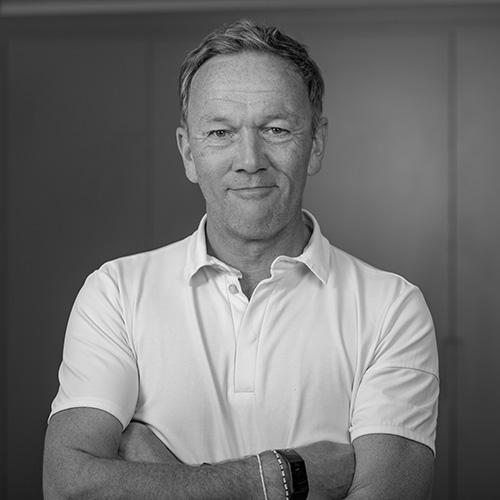

Simon Allford © Devin Blair
David Taylor: Hi Simon! how are you?
Simon Allford: I'm alright; I’m good, David, how are you!
DT: Pretty good. I thought we would just get cracking, actually, because your time is precious. What is your vision for the RIBA as its president elect? And congratulations by the way!
SA: Thank you very much! My vision is, as I outlined, I hope rather clearly(!) and successfully in the end to the voters, is to create a place where architecture is front and centre. I used the strapline the House of Architecture at the RIBA and I think that essentially we are a profession of different people with different interests, different sizes of businesses, different focuses, different views on the world, but united by a kind of shared commitment, ultimately, to try and leave the world a better place than we found it.
I would like the debate to focus around the RIBA. I don't want the RIBA to controlthe debate but from the Georgian Society to Architects for Change to any other group, I think that the debate and discussion should focus around the RIBA. That's a virtual RIBA as well as a physical RIBA, and therefore we should be the host to the diverse interests of our membership. Whether it’s about carbon, about the post-COVID world, about diversity, about housing, about materials, about historical styles – whatever it might be – I would like that conversation to be captured and shared. And therefore we would become an Institute of ideas rather than one of inertia.

DT: What was the straw that broke the camel’s back and caused you to say: I'm going to stand?
SA: A few months ago I think I was locked in a room somewhere where I heard of the latest changes within the RIBA and the latest restructuring, and for a long time I felt that the RIBA was out of touch with the profession and that young architects weren't engaging with it at all. I criticised it openly in the press and that stimulated a lot of interest from colleagues saying: you're right, it's too distant from what we do, you should stand and change it – which was not my plan at the time. But also on a positive level from people within the RIBA saying: yeah, you're right, we are distant from architecture but this restructure is much more positive than you think, and if you stood, there is an opportunity to help the RIBA change quite dramatically over a short period of time, which is always the reason why I've never stood before. I always thought it would be too slow and too long a slog, whereas I was being advised and I looked into it - if potentially the changes might allow the RIBA to move and evolve in the right direction quicker.
DT: You were obviously very happy to win; where were you when you heard the news, how did you celebrate, and what are your views on the turnout?
SA: I was happy to win because you put yourself up for this thing. You put yourself up, you have a campaign, you think you have an idea worth pursuing, so I was happy that enough people agreed with my vision, and I felt that was important. There's no point just scraping through, so I won reasonably well by RIBA standards, so I was happy. I was walking to work; I get a phone call at 8:00 o'clock – everyone was advised you would get a phone call at 8:00 o'clock…

DT: From who?
SA: From the honorary secretary, Kerr Robertson. He advised all of us he would phone us all from 8:00 o'clock onwards to say whether you’d won or not. So, I assume I got the first call and then the others followed. So, I was delighted to get the call, I was on the way to work and then it was announced. Then lots of texts and emails flooded in and frankly, I didn't particularly celebrate at the time simply because I packed the day full of work to avoid that kind of empty feeling if I’d lost! (laughs)
DT: Yeah. So, you didn't even have a pale ale in the evening? (laughs)
SA: I took the family out and had a glass of champagne
DT: Very nice! I suppose that brings me to the next question, which is: what should an Institute be for?
SA: I've always said throughout this campaign and I genuinely believe this: the profession can do well and will survive and prosper without an Institute like the RIBA. So, for an institute like the RIBA to be successful in the 21st century it needs to actually become of cultural and professional value to its membership. The RIBA should be capturing debate, challenging how we all think and helping us think better and sharing best practise, whatever that might be, at different scales. That's why I talk about an Institute of ideas because I think the RIBA shouldn’t try and control professional thinking; what it should say is there are a diverse set of attitudes as to how we might solve, for instance the carbon challenge. Let's get that debate out there in a positive way and allow ideas to be promoted, criticised, shared, tested - and therefore it becomes a resource. And also, at the right time, a moment of inspiration, you know, with exhibitions - both look at history with the amazing archive it has, but also best practice in all its forms, by all its members, around the world.
I also think we should invite outsiders in much more, so if you're not an architect but you have an interest in architecture…wider than the honorary fellow thing there's no opportunity to get involved, so let's open it out to those who care about the environment and architecture.
DT: What about the role of the architect over the next five to 10 years? How do you think that will change? What do you hope it will become? Is carbon the biggest one?
SA: Yeah, I think there’s always people in the profession saying it’s dying but it's never been more popular for instance, as a place of academic study, in terms of numbers of students. So, I have every confidence the profession is very different to the one I went into 30 years ago. It will continue to evolve. The big challenge underlying all this is carbon – that's the big one – but there are lots of events along the way that we have to continuously respond to. For instance, how do you design in a post-COVID world? There’s the impact of pandemic on architecture and urban design. There’s: what will come from Grenfell in terms of procurement, liability and responsibility? Some architects can’t get insured at the moment. So, there’s the immediate impact on professional practise that Grenfell will ripple through the profession over the coming years. And then of course we are now into – it may change hopefully - the recession and how will the profession cope with that and particularly the next generation, for whom, having years of very good employment amongst architects we are likely to hit a time of less employment and more unemployment.
But sometimes that terrible misfortune does actually lead to people diversifying and acting in different ways, and that can be part of the stimulus the profession evolving. Some of the architects I know work in film, some are clients, some are in contracting as well as a large number in practice. Some have diversified off somewhere else completely, but architecture is a great training, so I don't think the training to be an architect means you must be an architect. It’s a great training to become a problem solver and a contributor to design in the modern world.
DT: What other ambitions do you have personally or professionally?
SA: (laughs) I have many ambitions professionally and that is to keep trying to make better buildings. Architecture as in the practice in which we are involved remains absolutely central to what I do and how I do it, and we've become an employee ownership trust and we should have a model that we all can carry on practising and evolving that practice and contributes to that practice long into the future, and I see the RIBA as a another chapter on that journey. I was chairman of the AF before and now I will eventually become president of the RIBA; it's just part of that journey, with architecture as the focus of that journey rather than a professional ambition. If I can help the RIBA engage better with architects and architecture and then leave, and it will carry on evolving in myriad new directions then that would have been a successful presidency. Practice will be a focus for me throughout and beyond and after
DT: I've got one more flippant question that's just occurred to me. If you had to choose between your beloved Sheffield Wednesday being promoted to the Premier League, or taking up the reins of the presidency of the RIBA, which one would you choose?
SA: (laughs) That’s exactly the sort of challenge I used to throw up to my old man! (laughs). They are very different worlds. Having been docked 12 points by the ‘League of Greed’ it’s an ever more difficult thing. I have to say, even in my most dark moments of campaigning, I thought I was more likely to win the presidency than we are to get promoted! Having won the presidency, I'm very much hoping we will get promoted!
DT: (laughs) That’s a fantastically political answer, I love it! Thank you for sparing me some time, Simon!
SA: Good to chat with you. Cheers! Bye!
Simon Allford will take over the two-year RIBA presidential term from Alan Jones next year (1 September 2021)
Share this news


Recent

News
Rethinking Tall: From output to input in London’s next generation of towers
Following NLA’s London Tall Buildings Survey, Callum Tuckett, Managing Director at Multiplex, explores how digital innov...

News
From Retrofit to Futurefit: Reframing reuse for a resilient urban future
Ahead of the Built World Summit, Harry Cliffe-Roberts of Gensler explores why ‘Futurefit’ reuse must become central to c...

News
Introducing the First Edition of NLA Annual
NLA launches the first edition of NLA Annual, reflecting on a defining year for London’s built environment and the peopl...
Stay in touch
Upgrade your plan
Choose the right membership for your business
Billing type:
Small Business Membership
£90.00
/month
£995.00
/year

For businesses with 1-20 employees.
Medium Business Membership
£330.00
/month
£3,850.00
/year

For businesses with 21-100 employees.

View options for
Personal membership