New London Architecture
Five Minutes With... Sowmya Parathasarathy
Tuesday 15 April 2025
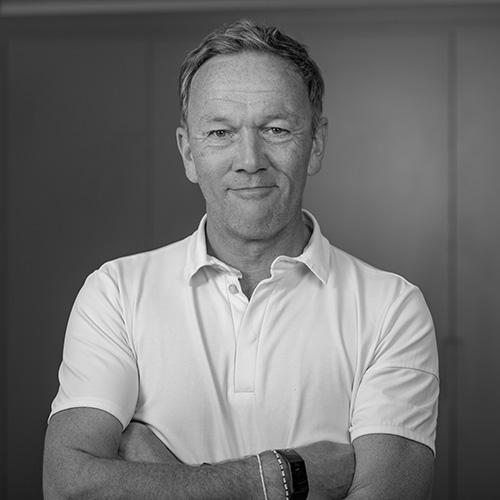

David Taylor meets Arup director Sowmya Parathasarathy to discuss some of the current thinking on the New Towns Taskforce she sits on and what’s on her drawing board globally.
David Taylor
Hello, Sowmya. How are you doing?
Sowmya Parathasarathy
I'm very well, thank you. David.
David Taylor
Good! I wanted to ask you, principally, about your work on the New Towns Task Force, but before we do that, I wondered if we could just have a quick chat about what you're doing at Arup currently. What's on the drawing board, as it were, at the moment for you?
Sowmya Parathasarathy
So, my role at Arup is that I'm an Arup Fellow and Director of Urban Design and Masterplanning. I primarily work with an integrated planning team, a planning and design team that's based out of London. But of course, we have teams in many other countries in the world, and I lead complex, multidisciplinary masterplanning projects; quite a lot of it in the UK, but also in other parts of the world. I also have a role in Arup where I lead our work in emerging markets, particularly India, the Middle East and Africa. What we do is sustainable urban development and masterplanning, bringing together a number of disciplines, with all the usual outcomes. But particularly in our current world of needing to be climate resilient, that is something that our clients find very useful, all over the world, really. This might include some New Towns and larger new greenfield developments, but a lot of it includes transformation of our existing cities and places to make them denser, more walkable, more resilient, more sustainable. Some of the projects in the UK that I've worked on over the last few years have included the London Olympic legacy masterplan and the masterplan for the Battersea Power Station development. I worked on a project for the Wellcome Trust just south of Cambridge, which is to expand on the research institute they have there, bringing in other uses, including housing. I'm also doing similar kinds of scales of work in other parts of the world; I’m currently working in Morocco, for example, to develop a sort of energy ecosystem, and what that means in terms of all the urban development that needs to go with it in in southern Morocco, and projects in Mumbai, India, for example. So that is an example of the geographic scale and types of projects that I'm involved in.
David Taylor
So, you have a very global view on development. How would you say London is faring currently in terms of its development scene? If you were to take a sort of temperature test of London, vis a vis all those other places around the world that you're working at, how would you characterise that?
Sowmya Parathasarathy
One of my London projects is also doing the strategic plan for Thamesmead waterfront, between Thamesmead, Olympic Park, Battersea and so on. I mean, one of the advantages London has is that it has a very strong existing network of infrastructure. Basic infrastructure, be that transport or energy or the planning system, for that matter. That is a huge plus point. With some of the projects in other parts of the world that I work on, you have to start developing the infrastructure from scratch in some way. So, in London, the big difference is, you have the opportunity to build on what's already there. But I think it takes quite a long time in London to get things through planning and all the various other hoops that we get. It's something that we've all been talking a lot about, which is, how do you make things quicker? How do you have better ways to fund innovative types of infrastructure? How do you move beyond ‘business-as-usual’ and our existing regulations, to do things better? A simple example: places in Europe seem to be able to build new housing typologies with new materials, for example, and innovations that really promote decarbonization, for example, much better than we do in in London. So, I think one of the things that I bring to the table is an open mindedness to learning from other cities and places. I mean, we have our own strengths here. But I think learning from some of these other places in Europe, but also in other parts of the world could be beneficial to how we do things in London.
David Taylor
And also, presumably, to the New Towns movement - the new New Towns movement that you're involved with, with your work on the task force, could you, obviously, without going into too much detail about it, because it's going to report again, isn't it? Could you just let us know a little of the work and the scope of the work that you've been involved with there?
Sowmya Parathasarathy
Yes. As you know, the government has set up a New Towns Task Force, of which I'm a member. And the remit of the task force is really to advise government on what the new New Towns programme might look like. Obviously, one of the key limitations that we are seeing in the UK is that we are just not able to build enough housing to meet the demand, and we're not able to build enough of the kinds of housing – diverse types of housing – to meet demand. And in some of the 'hot' places in the UK, particularly in the London and the Southeast, we have serious problems around affordability. So, one of the main aims of the New Towns Task Force is to identify places where we can build at pace and at scale, the kinds of the diverse types of housing that we need. But it's not just a housing numbers game. It's very much tied in with economic development. So, I mean, housing is absolutely limiting labour mobility in the UK. We don't have good quality housing. The existing stock is worsening public health. It's disrupting education, and we all know, children stay with their parents far too long, and so it's delaying family formation. And all of this is having a consequence on economic development. So, I think these are the two-pronged aims of the task force – to identify New Towns where we can think from scratch on building diverse types of housing and having a positive impact on economic development. But also, it's an opportunity, because they will be planned from scratch. Even if they are urban extensions or greenfield, they'll be planned from scratch. So, there's an ability to think and align better with the strategic infrastructure that's needed - be that transport or energy and water and waste provision; a different approach to perhaps higher density, more walkable communities, a different approach to providing amenities and social infrastructure. Not after the housing is built, but maybe with, or even before, the housing is built, so they become attractive places for people to move into. So, I think New Towns are not just about providing housing, which we will need to do in our existing towns and infill sites, and brownfield sites anyway. And probably the housing that we built there will be greater in overall numbers. But I think the New Towns programme is an opportunity to really rethink what places for the future would be like, and to do it in a joined-up way.
David Taylor
To what degree is the general thrust towards settlement extensions rather than greenfield new build? Are you able to even characterise that from the discussions that have been had so far?
Sowmya Parathasarathy
Yes, I can. In fact, the definition of a New Town, you know, when the task force was set up, we had quite a slender remit. It was that New Towns would be places where you can at least put 10,000 homes. So, large. But I think since then we've been discussing what types would these be? What is the definition of a New Town? And certainly, one of them would be standalone greenfield sites in the right locations. I mean, Milton Keynes is an example of a standalone greenfield site at the time that it was designated, and it has had the opportunity to really grow and be very successful. It's 300,000 people now. But we've also been talking about significant urban extensions, most definitely falling into the category of possible New Towns. We've talked about whether there could be New Towns within existing towns, in places where there's an opportunity to really have that scale. That's one of the challenges. But some of the largest cities might actually have urban sites that might qualify, in terms of scale, to be designated New Towns. And we've also been looking at existing New Towns and seeing if there's an opportunity to grow them even further, or renew them in some ways. So, there's quite a vast range of types that could be New Towns. As you know, we had a call for sites in December, and we received about 100 submissions from various sponsors, both public and private, and a majority of them were actually urban extensions. But there were some greenfield sites, and they were distributed around the country. So, we are most certainly looking at both urban extensions and greenfield towns. It has to fulfil a number of criteria that we've been working on. The advantage, I guess, of urban extensions would be there's already a little bit of a framework of infrastructure you can build off. And so they have the advantage of maybe getting off the ground faster than green field developments would.
David Taylor
And thus, are considered more sustainable solutions, essentially…
Sowmya Parathasarathy
More sustainable, yes. Potentially more viable as well. So yes, I mean urban extensions would quite likely be in the mix.
David Taylor
What's next for the task force?
Sowmya Parathasarathy
We're about halfway through, and what we've been working on so far is expanding our definition of New Towns, working on some placemaking principles, developing criteria for how to select the locations and places, and obviously doing quite a lot of engagement with the wider industry, both the public sector and various professional bodies, individuals who have expertise. And, going forward, I think we are very much now down to testing the viability of whatever we want in the New Towns, including a significant proportion of affordable housing and social housing, for example. We've now got the criteria. We've got a number of sites we are evaluating, so we'll be doing that, and we are also strengthening and refining the placemaking principles. Where do we want to set ambitious criteria, perhaps more ambitious than in other places? And testing how we might be able to deliver that and also looking at funding and delivery models, learning from past examples, and seeing where we might need to strengthen legislation or policy and methodologies to actually deliver these places over time. So, it's quite broad-based still, and in the summer of this year we will complete our final report, which we will submit to government, which will have the identified places and some recommendations on how we might be able to fund and deliver this. And with government, because I think that's an important piece.
David Taylor
Final question. I presume you are, then, fairly optimistic about the contribution that this particular movement can make to the 1.5 million homes target, are you?
Sowmya Parathasarathy
The 1.5 million homes target has is a target for this parliament, and a lot of that responsibility lies with the combined authorities, the boroughs, the local authorities, to allocate the land. And to be able to find delivery partners to get that off the ground. So that's for this parliament. Now, I think New Towns, possibly some of the New Towns, might be able to start by the end of this Parliament, given these are New Towns. But, as discussed before, perhaps some of the urban extensions might be able to get off the ground sooner rather than later. So, I think while it might contribute to the 1.5 million, I mean, there'll certainly be an overlap, but the expectation is that we are setting ourselves to, at pace delivery, even beyond this parliament. So, it might contribute over and above the 1.5 million, while I think there might be some overlaps. But I think the point of all the recommendations we are making is to bring more actors to the table in terms of who builds, so we'll be able to build different types of homes, and enable that, not just the typical models that are currently being delivered. And so, in the longer term, I think it will play a huge role in enabling different kinds of types, tenures and homes to be built at a pace. So, while it might have some contribution to the 1.5 million, it's a slightly longer-term play.
David Taylor
Sure. Well, thank you very much for outlining your work, and good luck both with your work at Arup and with the New Towns Task Force. Thanks for speaking to me.
Sowmya Parathasarathy
Okay. Thank you very much, David. Bye!
Share this news


Recent

News
Zone29: A retrofit to create a new home of careers and enterprise for the University of Westminster
Zone29 transforms a former office building into a careers and enterprise hub for the University of Westminster, connecti...

News
Meet the NLA Awards 2026 Independent Jury
The NLA Awards 2026 Independent Jury brings together five leading figures with expertise spanning architecture, urban in...

News
NLA Education Expert Panel: Dr Nagham El Elani on Embodied Learning Spaces
Cora Kwiatkowski shares insights from NLA’s Education Expert Panel on Dr Nagham El Elani’s research into how movement an...
Stay in touch
Upgrade your plan
Choose the right membership for your business
Billing type:
Small Business Membership
£90.00
/month
£995.00
/year

For businesses with 1-20 employees.
Medium Business Membership
£330.00
/month
£3,850.00
/year

For businesses with 21-100 employees.

View options for
Personal membership