New London Architecture
Five minutes with... Steve Sanham
Monday 10 July 2023
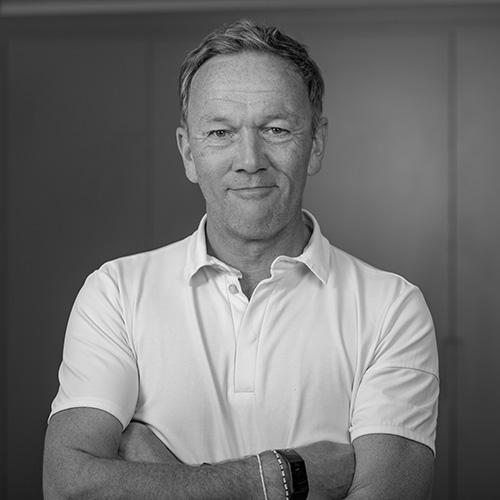

David Taylor talks to Common Projects co-founder Steve Sanham about the Zodiac project in Croydon, the crisis in temporary housing, and ‘unknotting knotty problems’ to benefit communities.
David Taylor
David Taylor
Hi, Steve, how are you doing?
Steve Sanham
Hi David. Well, it's a big question!
David Taylor
(laughs)
Steve Sanham
Unfortunately with me, you'll probably get a big answer. It's difficult out there at the moment, for a lot of people, and it brings me quite a lot of distress looking at looking at what's going on in the world at the moment. Rebel armies marching on Moscow, the climate crisis, societal issues manifesting in all sorts of things, people dying in boats crossing the Mediterranean, etc. All these things weigh a lot on me, and I'd like to think on most people. But, fortunately or unfortunately, for myself, it seems to me to come to the surface in quite a real way. I guess that's why we set up Common – it was to try and create a business that could do some good things in a really real way, to address some of the issues that we might have an influence over.
David Taylor
Perhaps we could look at some of those issues through the lens of your ongoing and upcoming projects, particularly the Zodiac development? Could you just give us a grounder in that project, and also pave the way into the broader topic of housing, generally, in London?
Steve Sanham
Very happy to. Zodiac is a really interesting one. It is an unbelievably complex project, which is probably why the building that we're playing with there has remained empty for 30 years. It was an office building. It sits underneath an existing residential, which was made famous by Peep Show - the Channel 4 comedy series...
David Taylor
In Croydon, right?
Steve Sanham
In Croydon, yes, west Croydon, an area called Broad Green, which we have progressively immersed ourselves in as a place and a community. It's a two-acre 1960s utopian estate, built with all good intentions, but plonked in the middle of an area that maybe wasn't ready for it, and maybe never has been. Part of it was an old nightclub, which was vacated in 2001, with an office building, which has been empty for 30 years. This area has problems. It has a high rate of knife crime; it was the centre of the riots in 2011 in South London, big gaps in the street frontage are still there as a result of those riots. And it hasn't helped having two acres of derelict 1960s utopian dream in the middle of it for a large part of that time. So: there's a lot of reasons to get this right. There's a lot of reasons to reuse the existing building. We've done all the carbon counting; we get really geeky about this stuff. We understand that using the existing building gets us to a position where if we didn't and we'd started from scratch, we are suddenly having to plant 120,000 trees to offset the carbon that we've thrown away just with that one decision. And we also understand that the climate crisis is today. So, locking in the carbon that has got us to this position and crisis is the most important thing we can do. Creating super energy efficient buildings to replace carbon intensive structures might have a payback over the next 40, 50, 60 years. But if that's the plan, then we're all a bit screwed. So it's about making the right decisions now, off the back of analysis and understanding what we're doing.
David Taylor
You mentioned that it's difficult out there at the moment. Has this project been included in that feeling difficult? Has it been impacted on the commercial state of play?

Steve Sanham
Yeah. The last few years have been weird and wonderful. So we've been through some iterations as to what the scheme could be. And at the moment, we are still considering. We're on site, we're building, but we're still considering what the exit for the apartments that going to end up building in there will be and that is a result of a pretty wonky market at the moment. We're in a housing crisis at the moment where people can't get access to the homes that they need. But we're also in a place where they can't get the mortgage that they need to buy the homes. There is a rental market that's going through the roof. And those sorts of things can't be solved by developers. Because we rent and sell for whatever the market dictates, they need to be solved more centrally. So, it has made the project difficult to deliver. But one of the great things about what we're doing is that we have Homes England sitting alongside us providing the development finance for the project. They are a great partner in that respect, and focused on housing delivery. They need to charge the interest in line with how a high street bank might charge, but the idea of delivering homes is definitely held equal pegging, if not definitely more than the money they can make out of providing the loan. So that gives us a bit more of a chance to deliver a high-quality product and be a bit flexible about what we do with the product when it's completed.
David Taylor
How has the public consultation been in Croydon? And how has that helped you with the project so far?
Steve Sanham
It's been an interesting process. I mean, we've done projects in Croydon in a former life, where we spoke to 1500 people and got a big groundswell of support and did some really great things. This one has been a little trickier because of the particular micro-areas that we're working in where people feel generally left behind. Now, that hasn't manifested in negative feedback. It has really manifested in very little feedback. It doesn't feel to me that people in this area feel that they stand any chance of really being heard. So, the approach that we've taken is by partnering with some really, really great community organizations in the area. We're really trying to make this the centre for the rebirth of Broad Green as a really lovely area. It used to be wonderful 100-and-something years ago. There used to be a broad green. There isn't any more. Doing simple things like creating a project to paint a hoarding around the site - we had local artists come and help us with that. We had 200 local people come down and get involved in creating a really beautiful community mural. And we have people stopping us in the street saying this is the first positive thing that's happened in this area, since they moved in. Which is a wonderful thing to hear. A bit sad as well. But I think there's a real opportunity for local people to be a big, big, big part of this building. And that's going to manifest itself in the community centre once we get planning consent for it, and the community gardens which we're going to build in front of the building. Broad Green can have its common back!
David Taylor
Yeah. And I'm reading in the blurb about the project that the description of the architect you’re working with, shedkm, is your 'socially responsive architect'. That's an interesting way of putting it. I mean, certainly, given that you'd hope that most architects would be socially responsive – but it's sort of foregrounded. Is this your own ethos too? Would you describe yourselves, Common Projects, as socially responsive, more than anything else?
Steve Sanham
Yeah, I think so. I mean, we do quite a lot of navel gazing, trying to work out what the purpose is of what we're doing. Being socially responsive, socially responsible; being an approachable and engaged and honest, developer is important to us. And I think trying to get under the skin of an area, trying to work out what's holding it back, trying to work out what people are passionate about. And what people want to get involved with is an important part of that. And making good decisions, that it's connection with lives. Sounds so bloody simple, doesn't it? That's what we like to do.
David Taylor
Yeah. And another part of your makeup, I suppose, is research and analysis. I understand you're doing work in temporary housing at the moment. Could you tell us a little bit about that?
Steve Sanham
Yeah. The temporary accommodation situation in this country is heart-breaking. By temporary accommodation, people often think that we're talking about building containers, and putting people in the containers, or whatever examples are across the country. But what we're talking about is the emergency accommodation services. A single mother with three children arriving at a local authority, with all their worldly possessions in a plastic bag declaring themselves homeless, and they need housing immediately. The local authority has got an obligation, a legal obligation to find somewhere for them to go. And it generally means unbelievably substandard accommodation for an indefinite period of time. Because there's so little in the way of high-quality accommodation for these people, they end up in a hostel, or bed and breakfast, at a huge cost to the taxpayer. Nightly paid accommodation, 150 quid a night or whatever. And it's very, very knee-jerk, very, very desperate at the moment. Somebody told me a stat the other day, that one and a half per cent of the population of Hackney, the borough of Hackney, is children in temporary accommodation.
David Taylor
Wow!
Steve Sanham
Which is just, I mean, it just makes me want to cry. And we feel that this is a housing crisis, which is potentially more important than Johnny not being able to buy quite the house that he wants to buy. This is a housing crisis of epic proportions that we have in this country. And it's a housing crisis that has so many things that come off it in terms of health outcomes, in terms of educational outcomes for children who are trying to do their homework in a room shared with two siblings: in terms of crime, in terms of all sorts of knock-on effects. If we don't get this right, we get a lot wrong in society. And we're not getting this right at the moment. And so, we're doing a piece of work, looking at what might constitute good quality in temporary accommodation. Because at the moment, the planners don't generally understand it as a thing. We've been pointed at London Housing Design Guide or other such documents, which mandate you to deliver massive balconies and loads of storage and all that, but when the alternative for these people is a single bedroom in a bed and breakfast it is not necessarily top of the priority list. And then working with local authorities to try and work out how we co-design what the financial proposition will be that will be acceptable to them. And that they can commit to, and backing that into the right money. So, it's an ongoing process. More on that later in the year. It's something we are very passionate about. And we have decided as a business that we want to give a third of our time, just to unknotting knotty problems. Do only two thirds of our time doing the doing, and a third of it at least thinking about it.
David Taylor
Yeah, that's very laudable work. Last question, because we're just up to time. How do you remain positive and optimistic in outlook faced with the sort of myriad problems you listed in your first answer to the simple question: 'how are you?'
Steve Sanham
It's difficult. I look at my family, I look at my son, my five-year-old, an absolute inspiration for me. And I want to do whatever I can to make his future as comfortable as possible. And so that keeps me going. I think it's important to stay centred in many ways. It's important to have perspective as well. That actually, I, we, a lot of people in this country, are very, very, very privileged and in a pretty good space, compared to a lot of other people. Take that positivity. Use the education that we have had, and try and do good things. I think that's the way to do it.
David Taylor
Yeah, well, hats off to you, and good luck with all of these projects, including Croydon and the temporary homeless research. Thanks very much for spending some time.
Steve Sanham
Thank you. It was really good to speak to you.
Share this news


Recent

News
Five minutes with… Leigh Johnson
David Taylor meets Leigh Johnson, managing director of Barking Riverside, to quiz her over the 20,000 homes project and...

News
Winning Design Announced for 'Hope in the Square' Competition
NLA in partnership with the London Borough of Southwark are proud to unveil the winning design of our 'Hope in the Squar...

News
Our partnership with ActionFunder to deliver measurable social value
NLA and ActionFunder partner to give London’s built environment sector a scalable way to deliver and prove community imp...
Stay in touch
Upgrade your plan
Choose the right membership for your business
Billing type:
Small Business Membership
£90.00
/month
£995.00
/year

For businesses with 1-20 employees.
Medium Business Membership
£330.00
/month
£3,850.00
/year

For businesses with 21-100 employees.

View options for
Personal membership