New London Architecture
Five minutes with...Graham Hurrell
Friday 21 May 2021
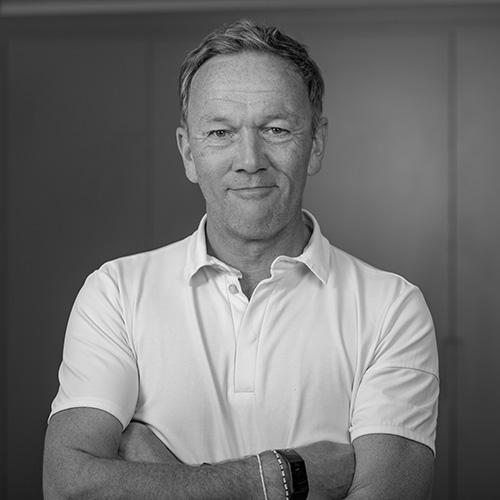


David Taylor
Graham, it's David Taylor here. How are you?
Graham Hurrell
Hi, David. Good afternoon. Yeah, doing pretty well today, thank you.
David Taylor
Good! So, for people who don't know your firm, could you just explain, in a nutshell, what you're about and what you're up to at the moment? What your chief areas of interest are, please?
Graham Hurrell
Okay, sure. So, Wicona is a façade system, and it's a brand within the bigger Hydro Group of companies. We specialize in building façades made from aluminium as a core material. Our systems are designed to make buildings perform, make buildings look as interesting and as exciting as they can, and to give a high degree of comfort and satisfaction to the people who are inside the buildings.
David Taylor
What is the chief benefit of the kind of aluminium you produce?
Graham Hurrell
Because Wicona is an integrated part of the bigger Hydro group, there's an awful lot of innovation and research within Hydro into aluminium. And this means that we can innovate and put that innovation through our supply chain. We're supplied through an internal extrusion process. That process is supplied by an internal casting of aluminium billets, smelting, and that process is supplied by either a remelting, or a mining process. In essence, what Hydro has been able to do is develop some low-carbon methods of producing aluminium, one of which involves the use of demolition products from previous buildings, going back into the supply chain. And that hugely reduces the carbon footprint per ton of the aluminium that we're able to put in our system. So, it's quite an innovative new process. But it's something that we're quite proud to be bringing to the market now.
David Taylor
So essentially, it's reusing or recycling aluminium that's been used in old buildings, is it? Scrap aluminum?
Graham Hurrell
Absolutely, right, David. Yeah. And it's most definitely segregated and sourced from the building source for scrap, as opposed to other sources of scrap aluminium. So that allows us to control the alloys and the types of products that go into the remelting process.
David Taylor
Are we likely to see this in some buildings soon that you're connected with?
Graham Hurrell
Yep, very much so. There are a number of buildings already in the UK, that have been constructed, and that are now operational, that have this material within the facade. And in London, probably our first project will be Ilona Rose House. And we have the Royal College of Arts project, which will soon be completed and available for everybody to see as they walk past. And there are a number of other projects in the pipeline that are in design stage/ specification stage where these low carbon alloys will be part of the facade and part of the building embodied carbon calculation.

David Taylor
As a broad question, how do you think London is doing in terms of its approach to sustainability? And how is that perceived amongst tenants and owners of buildings?
Graham Hurrell
I would say in the last two years, particularly since we've had something quite strong on the sustainability front, we have seen interest. And what we see is interest certainly from main contractors, now with in-house sustainability teams who are looking for the best materials to meet, I don't just mean low embodied carbon, but there's a whole raft of sustainability goals. So they're looking at that. Developers, similarly, because clients in some sectors are becoming more discerning about the pedigree, performance, and environmental impact of the materials that they use. So, we do get a lot of interest and spend quite a lot of time, now, talking not just to building designers, but also the slightly more cold-edged commercial elements of the building segment in London, about how these benefits can actually translate into something for them, their clients, their tenants. So, we've seen, I would say, an increase from a little bit of scepticism. And now I think sustainable products are no longer really regarded as something fringe in construction, but something that can be achieved quite readily.
David Taylor
Do you have a job on your hands to persuade people of the sustainable merits of a product like aluminium? Or is it an easy, open door?
Graham Hurrell
Okay. So, I think our biggest task at the moment is to explain how aluminium can be viewed as a sustainable material; whether it's through responsible sourcing schemes, whether it's through low carbon, whether it's through its performance in use, you know, contributing to limiting the use of fuel and power. Most of it, I would say, explaining, rather than having to necessarily persuade. I think once we are able, as an industry, to get our point across and open up a little bit on how we make things, how we produce things, how the technology works, I'd say we're seeing a lot of interest at that point. So, it's more a question of explanation, I think, than persuasion at the moment.
David Taylor
Those two projects you mentioned, Ilona Rose House, which is I think, for Soho Estates, isn't it? And the RCA, the Royal College of Art. Could you just tell us just a tiny bit more about what their use of aluminum - and scrap aluminum I suppose – entails?
Graham Hurrell
Sure. Okay. So, both projects have aluminium curtain wall-based facades, probably with windows included in that, and certainly the RCA project has some external aluminium fins, which we also extruded. In both cases, what the design and the client team wanted was evidence from us that the aluminium used in those profiles to build those facades was actually verifiable from our low carbon, remelting, pre-consumer scrap program. And so, one of the most important things clients are looking for is proof that what they've asked for, which is a low carbon alloy billet going through the extrusion process, is actually what we have made. And that it doesn't come from a kind of generic source. So, a lot of what we do is around proving and traceability. The performance that the client wants absolutely mustn't be in any way less than the performance that you would get from what's called a primary aluminium billet, which comes from mining. So, we have to make sure that everybody understands there's no degradation in performance, structural, thermal, etc. Obviously, the client's looking for durability, as they would normally. So, we've had to pool all our research findings, our specifications, and our supply chain info together to show the client and the design team that they are going to get a reduction in embodied CO2, but without any compromise in any aspect of the design.
David Taylor
Brilliant. Well, just one very final, final question, where do you get your old aluminum from? I mean, it's from scrap from old buildings, but is it from other sources as well?
Graham Hurrell
So currently, we have a specialist scrap processing plant in Germany, which is owned by Hydro. And that plant, and another one to come on stream in Europe shortly, actually have a specific segregated waste intake from the building industry. So right now, there isn't a plant in the UK that could do something similar. But the technology is there; we have it. And as the demand grows, and we need to expand our capacity in – I would think in most European countries – at some point with the demolition rates are high enough, there will be enough material to expand our capacity. We are investing in more. But it is most definitely a documented, segregated chain. And it is from the building facade demolition industry that we actually generate these particular materials. Within the scrap class, we have other processing features using other sources of aluminium. Currently, Germany manages to supply everything that we need. But I hope that we have to build more.
David Taylor
If you do open some somewhere in this country, obviously it would lessen the transportation load in a carbon sense too, wouldn't it?
Graham Hurrell
Err...Well, it would when we have to move the aluminum billet from our smelting facility, which is also in Europe, over to the UK. It would reduce it slightly. But in comparison to the carbon used in the smelting process, the carbon used in the transport process is relatively small
David Taylor
Right.
Graham Hurrell
And I should additionally point out we do; Hydro, our parent company, does have remelt facilities in the UK to produce billets from scrap material. But that's production, i.e., pre-consumer scrap, as opposed to demolition, post-consumer scrap. So that would be the next logical step for us. We just have to see how the capacity goes. But at the moment, capacity is increasing, demand is increasing for the low carbon alloys. So we can proceed, hopefully with more investment in the same technology in new locations.
David Taylor
Brilliant. Well, thanks for your time. That's a fascinating little glimpse into a world I'm not massively familiar with! So thank you.
Graham Hurrell
It's a bit behind the scenes. I know how materials get to our construction sites, I guess! But no problem at all, David, happy to help.
David Taylor
It's good to know there's sort of a second-hand market flourishing, in that sense.
Graham Hurrell
Yeah, I mean, aluminium has a good scrap value as a commodity, anyway. But what we're trying to do is use some technology to take that commercial value and give a very distinctive, discrete product offer that we can, with independent verification, say we have reduced the carbon.
David Taylor
Yeah, great. Good luck to you. Thanks a lot.
Graham Hurrell
No worries, David. Bye




Related

News
There are no bystanders in the transition to net zero
Gareth Atkinson, Director at CIVIC and Chair of NLA’s Net Zero Expert Panel, explores why the built environment must act...

News
Unlocking Hidden Value in Existing Housing with EV-Ready Retrofits
Harry Macgregor of ChargeGuru UK explores how EV-ready retrofits unlock value in existing housing, boost rental demand a...

Stay in touch
Upgrade your plan
Choose the right membership for your business
Billing type:
Small Business Membership
£90.00
/month
£995.00
/year

For businesses with 1-20 employees.
Medium Business Membership
£330.00
/month
£3,850.00
/year

For businesses with 21-100 employees.

View options for
Personal membership