New London Architecture
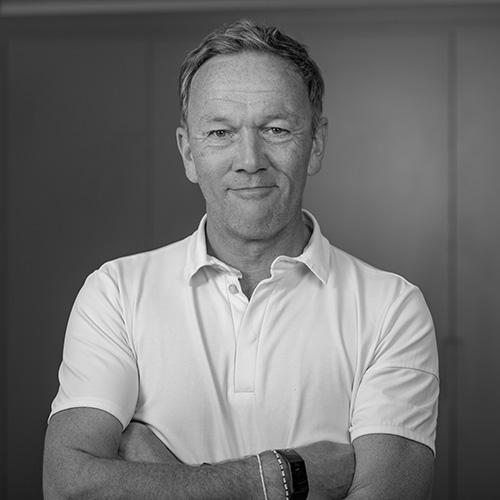
Five Minutes with...Iain Painting
Monday 11 April 2022

David Taylor
Hello, how are you doing, Iain?
Iain Painting
Very well, actually. Very well indeed. Looking forward to the spring. Getting out on my bike, and not getting wet…These are exciting times; still trying to work out what's going to happen to the Planning Bill and those exciting things?
David Taylor
Yeah. I'm sure we all are. Well, I wanted to talk to you principally today about your major news about joining up with Stantec. And the first question is probably: why? But also, how this came about. I'm always fascinated with these mergers and acquisitions - what was the initial contact? How was the fit? Where did you meet up and discuss this for the first time? And what are the overall impacts across the businesses likely to be?
Iain Painting
I think the ‘why’ and ‘how’ are quite interesting. The ‘how’ is, as you know, we are or were a very successful firm. Some of our competitors say no, but we believe and know we are amongst the market leaders in the work that we do. So, we were perfectly happy - we had a strong succession plan in place. We knew where we wanted to go. We were happy running forward and knew the challenges which we had ahead and the opportunities. So, when Stantec reached out to us, it was: "Ooh! That's interesting"...
David Taylor
…And sorry to interrupt but how did they reach out to you?
Iain Painting
...I'm not going to get into that, but when they reached out to us, the first question to ourselves, was “ooh, what is this?” That's an interesting question, or an interesting opportunity. Is it one that we want to explore? And the second question is, you know, the most important question we got to very quickly, which is: are these people, is the culture and fit, aligned to us? So you have two tests in your mind, and actually the culture and fit are the fundamental ones. My view is that if you own a business - and we were privately-owned, and therefore co-owned by a number of us – you have to make your decisions based on the future and what you think is best for your people, for your clients, and for the business as a whole, rather than based on the past. So we were happy, yes, because we were doing well, we're fine. We're well managed, excellent clients; lucky to work with some of the best clients in the business and some of the best projects. But a conversation with Stantec – the question is, where are you taking yourself in the future? What does that future look like? What is the opportunity? And over a period of time, therefore, going through that conversation and sharing those views as to the future, we became as a group absolutely convinced that Stantec is, and are, the people who will offer us, our people and our clients a fantastic opportunity to take on the challenges for the future.
I started working in 1989 as a planner. Those were the days of a letter and a red line plan if you were lucky. The complexity of issues and challenges which you face moving forward - climate change, social insurance, social value, social injustice, lack of land supply, all these issues are so complicated now, added to the way that we work and the career opportunities that our people wish to seek to employ and enjoy. It is an ever-developing and ever-increasingly complicated area. And I think we, as a partner group, came to a conclusion and a view which was that teaming up, going in with multi-disciplinary businesses and a fully integrated business like Stantec is a big change, a step-change for us as a business, but was a fantastic opportunity for us. That is from a commercial side. Then the second question: is there a cultural fit? If the culture and fit aren't aligned, then it's a waste of time, isn't it? Just too, too difficult. Their culture and fit and their values are very much aligned with ours.
David Taylor
And when do you know? I mean, I asked a similar question of Chris Williamson recently, whose practice has also undergone a sort of merger [Weston Williamson was bought by French infrastructure giant Egis]. When do you know that that fit is culturally right, in the process? What is the signal?
Iain Painting
It's when you're discussing where you see your business going, and they see where they see the business and the market going. And you almost answer each other's question for them, if that makes sense?
David Taylor
Yeah.
Iain Painting
You can't do a checklist. You're sat there, talking, spending time talking, and you're almost raising the same question at the same time and answering the same question and, you feel that spark of opportunity. And you're suddenly thinking: “Crikey! These are people who I can spend a lot of time with, and I'll enjoy working with, who are all challenging themselves in the same way”. It's an iterative process, I have to say. And you either know it and feel it, or you don't.
David Taylor
And what they now offer you, or what the combined group now offers principally as an advantage of this, is scale, presumably, is it?
Iain Painting
It's a range. It's breadth, not scale, probably, I would say. We were architects originally many moons ago, then planners, landscapers and environment - EIAs etc. And we have grown heritage and infrastructure. We've organically grown. They offer a breadth of expertise and knowledge beyond what we could grow to, in any feasible timeframe. Not just in terms of in the UK, they have a well-established, and very highly regarded water business and highways business etc. But globally as well, in North America – they have a whole breadth of knowledge and expertise, as well as scale. So scale is important because it enables you to resource and take on larger projects, of course, but really, I would say my personal view is it is that breadth of knowledge, expertise and disciplines really, which opens up a whole myriad of opportunities, doesn't it? Opportunities for your clients, opportunities for your staff and your people. It's just a much bigger prospect, isn't it?
David Taylor
In simple terms, what can you do now that you couldn't before?
Iain Painting
Um. I can pick up the phone and, in the UK, seek advice from colleagues on a whole range of technical matters, such as water, highways, etc. From a global point of view, I can lever in the expertise and knowledge from projects much broader than we have in the UK. If you go and look at where we're taking the UK property market and the challenges of climate change, it is going to need that high level, innovative thinking, really, to grapple with the next 50 to 100 years, let alone the next 10.
David Taylor
And with my London hat on, is there any discernible difference to the London offering that this brings? I mean more of the same I suppose, more of the same answer. (laughs)
Iain Painting
More of the same would be disappointing, in a way! Yes and no is the answer. Yes, in that it is the same people, offering the same services. Same people with the same appetite, same ambition and energy. They have an architectural team in London, obviously, and you will know the planning group, and we acquired Peter Brett a while ago… So in the short term, there will be the ability of us to draw on new wider colleagues. And I think it'll be project by project. Different opportunities will come. Most projects maybe will not see any change at all. But there will be an opportunity where there may be a major issue which we can say: "Hang on. This is really interesting. We know someone here can help you." I think our people hopefully will actually get to draw on that wider knowledge as well. So, the learning and the training and the skills of our people will also be enhanced by having a broader base.
David Taylor
So: last question. I'm looking at your website and it says, as the banner, "Barton Willmore, now Stantec" - is that how you're going to be known, or does the name Barton Wilmore remain a bit more? You've been going since 1936…
Iain Painting
No, in time we will become Stantec. It's part of that transition. As you can probably imagine, it's been quite a change for our clients in many respects. "Hang on, we've used Barton Willmore for years", for example. We say we have a great market presence; the market will get to know us as Stantec. And we'll transition over to the Stantec brand in due course. So “Barton Willmore, now Stantec” is a first stage of that transition.
David Taylor
And have you found out how many of the new company are cyclists, Iain? (laughs)
Iain Painting
No, I haven't! You have to be careful that you don't get labelled, don't you, David! (laughs)
David Taylor
I thought that would be your first question to them in proving their fit! (laughs)
Iain Painting
Well, the downside is that I'm often introduced as "he's a cyclist" - which is good and bad, I suppose, isn't it? People just walk away from you as much as they come towards you! (laughs)
David Taylor
Well, good luck with it. I'm sure it's all going swimmingly. You're excited, presumably?
Iain Painting
Yeah, absolutely. I'm 54, and, you know, I thought I was happy; doing good work, going along for another six years. And then, you know, I didn't think, aged 54, that I would have a whole new challenge ahead of me, and a whole new opportunity. And it's good. You have to move forward. You have to be honest with yourself, and I think you have to take your decisions as a collective, based on the future, as I said, not based on the past.
David Taylor
Sure. Congratulations. And best of luck.
Iain Painting
Thank you, David. Much appreciated. Cheers mate, bye.
Share this news


Recent

News
Five minutes with… Leigh Johnson
David Taylor meets Leigh Johnson, managing director of Barking Riverside, to quiz her over the 20,000 homes project and...

News
Winning Design Announced for 'Hope in the Square' Competition
NLA in partnership with the London Borough of Southwark are proud to unveil the winning design of our 'Hope in the Squar...

News
Our partnership with ActionFunder to deliver measurable social value
NLA and ActionFunder partner to give London’s built environment sector a scalable way to deliver and prove community imp...
Stay in touch
Upgrade your plan
Choose the right membership for your business
Billing type:
Small Business Membership
£90.00
/month
£995.00
/year

For businesses with 1-20 employees.
Medium Business Membership
£330.00
/month
£3,850.00
/year

For businesses with 21-100 employees.

View options for
Personal membership