New London Architecture
Five minutes with...Julian de Metz, founding director dMFK
Monday 11 July 2022
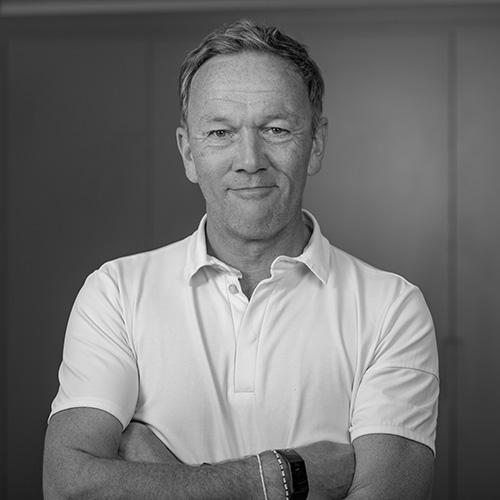


David Taylor chats to dMFK founding director Julian de Metz about moving to a new studio, growing team numbers, ‘waking’ offices which are ‘asleep’, and urging staff back into face to face ‘’synchronization” of hearts and minds…
David Taylor
Hi Julian? How are you?
Julian de Metz
Yes. I'm alright. I'm at my son's sports day. But I've just had to pretend not to be on a Teams call earlier! I'm very well. And buoyant!
David Taylor
(laughs) I wanted to talk to you about a number of things really, mostly based around your imminent move, which I understand is essentially moving two offices into one in Fitzrovia. I think you're in West Hampstead and one of your projects. How has that been, as a process? Why are you doing it? And how are you ensuring that you stay on top of quite rapid growth?
Julian de Metz
We had taken the decision to take a second office when people were coming back to the office. I think a lot of architecture businesses probably came back earlier than other sectors and other businesses. But as we came back, that coincided with a lot of our clients looking to do more office-related work. I think that the office refurbishment sector has suddenly become very buoyant, because I think a lot of people are sitting on slightly 'vanilla stock'; they're looking to make sure that they're not the ones being left behind. We were always in that sector; we always did loads of work for The Office Group and Derwent London and people like that, and so we've started getting a lot of that work back; people looking to make sure that, when people were coming back, theirs was the office that attracted the right tenants. So we grew quite quickly. And we took a second office. That was nice for a little while because I think everyone was very accustomed to working remotely using digital meeting software. That worked for a while. But in what is effectively an educational vocational business, I think it's very hard to create an atmosphere of learning, and of collaboration when you're split, either by 'from home', or even across a number of locations. So, we've made a choice, that we wanted to find a central location to bring everyone together. We were looking at a time when the market was a little bit softer, and we found a place in Charlotte Street. For me, it's all about attracting the best talent. And if we're going to attract the best talent, and we're to find the pick of the best people to work with us, the best place for us is to be is in the centre of town. We need to sort of 'walk the walk', and we do a lot of very, very nicely designed, fully fitted out, very design-led offices for people like The Office Group; we felt like we needed to be in that kind of environment as well. Or I felt like it was our right to be in that kind of environment, whereas a lot of architects are in slightly secondary space. So we just decided to be somewhere very central. Somewhere that had amenities all around it; just all of the things that it feels like the office needs in order to attract the right people. So: great amenities, gardens, restaurants, gyms, just everything that would make it a place that you could get people back by attraction, rather than by statute.
David Taylor
How are you finding managing what is a fairly steep growth in numbers? Because quite recently, you were at 26. You're now up to 40 and a bit more maybe. How are you finding that as a management issue?
Julian de Metz
I think it's a great challenge. It's very easy to take for granted that you were once a very close, tightly knit company, where everybody knew everyone, and everyone could approach everyone, and everyone was learning from everyone. And it's easy as a manager to forget that the new people coming in don't necessarily have the benefit of what's happened before. So, we have to work extra hard. On the one hand, the move to create a brand-new office has lots of different options for moving around within it. So we're not just making a CAD farm; we're trying to create an office that encourages people to spend two hours here, two hours there and move around and create more interaction between people in the office. By design, I guess the way we design offices, which is how we're designing our projects for our clients. But secondly, we're starting to implement more communal activity that has to do with reminding ourselves what culture means; what office culture is all about, and what our values are as a business. Because it's not immediately easy to communicate your values when everyone's just sitting at home or is spread around. We've had a lot of focus recently on setting out relatively traditional values; things like, if a piece of communication doesn't need to be digital, try to make it face-to-face, if you possibly can. And things that are trying to return to values, which I think are probably pretty healthy, which may sound a bit staid, but actually, I think, are fairly useful and bankable things to work on. I think there's a great value in people being in the same room together - in terms of the way they communicate with one another; the subtlety of their communication. A lot of that gets lost when we're working digitally.
David Taylor
It's quite difficult territory, that, isn't it, as an employer? To say something like that, because obviously, people have become accustomed to a bit more flexibility in working from home and all of that. How does that feel as an employer? You're sort of going out on a bit of a limb there?
Julian de Metz
Well, I think you notice with staff that they want to hang out with each other. You know, they want to go for drinks, they want to be somewhere. The social element of an office is very important to a lot of the younger people in the office. And again, it's easy to forget that for somebody with a wife and kids who's not necessarily in need of that. So I think you're off to a good start, just by what you see, when you get people together, they're brilliant; they always want to do stuff, they always want to interact, and to be social .That is a very big part of being in an office, and without that you could fall into employment and the running of an architect's business, it could just be like an employment agency. It becomes very transactional. And so what distinguishes that is the quality of the work that you're doing, and how enjoyable it is to do. And I'm not saying you know, we're perfect. But I think that having done it for 25 years nearly in this practice, where it works really well is when people are together, and when they're smiling, and they're having fun, and they're doing it together, and they're drawing on real paper. I think the flexibility that's come from home, home working and digital communication is a good additional tool. It's good to have a quick meeting so you don't have to rush across town for 20 minutes, which we always used to have to do. And it's good when you want to put your head down to get a bit of work done and you don't want to be bothered. But I think the message that we're trying to communicate to our people is that you want to feel like you work somewhere where there's a very collaborative and helpful vibe then the lion's share of the time, you need to be there. We want you to be there and I think even people who have been quite resistant to that, once they spend a bit of time doing that realize that that's more suitable for this business. I'm not saying it's for every business. But I think from having spoken to my peers, most people are in agreement that being in the office to run a design business is far preferable. I remember at the beginning of lockdown there was an interview on Thought for the Day on Radio Four; it was a rabbi, and she was talking about how lacking digital communication was in terms of nuance. She said when two people are together, their hearts synchronize. And I thought, well, may not be true, but it's a nice idea. There's a lot more empathy and communication that goes on, beyond the message itself. We took that to heart.
David Taylor
I just wanted to ask you two more things. Firstly, something that jumped out at me from your website in the About Us section – I'm always interested in the About Us text when people describe their architecture. You say that one of your approaches is to 'reinvent and alter existing buildings fearlessly'. And then you later talk about a 'brave' approach to heritage. I wondered if you could just unpack those two things, very briefly?
Julian de Metz
Well, we don't deal with a lot of Grade I- listed restoration projects; we're dealing with buildings that are Grade II and Grade II* quite often. And there's a general presumption of fear; a sort of terrified approach to heritage. And actually, buildings evolve. Hopefully you've seen from our work, that we've got a good portfolio of restoration projects where we fundamentally change the building. And through doing a few of those, over the years, I think we are competent in arguing the case for what's right for the building, not for how close it would be to the original to what it was originally, because that's not necessarily a good thing for it to be just returned to what it was because the program of the building has changed. Times have changed, and it's time for the next stage of the building's life. What I really like to do is to try and understand what the original architects did and try to imagine what the original architect would have done, if they were given this brief today. We recently did the Salters' Hall, for example, and that was a Basil Spence building. Our client, who remembered Basil Spence, because they were the ones who commissioned him, said to us, you know, do what you think Basil would have done. And having done it, he said, "I think Basil would have done this had he had the site that you now have". He didn't have that, at that time, things were quite different. So, I think for us, it's winning the confidence of Historic England or the local authority, that we are a good, safe pair of hands and good guardians, for a valuable building, but then trying to evolve its story in a way that doesn't take too much account of what it used to be; just takes account of what's the best thing for the building.
David Taylor
And I suppose a case in point is your work at Chancery Lane, is it, for The Office Group? does that exemplify your outlook there?
Julian de Metz
I think so, yeah. I think that's an easier win because it's one of those buildings that's been sort of decimated over the years. When we walked into it, and when you walk into a lot of buildings, they are kind of a disappointment when you walk through the front door, because they have been badly handled over the years. Chancery House is an example of that. So you know, it's a pretty easy win, to know that you need to enliven the basement by bringing daylight down into it where there wasn't before. And to use all the rooms for amenity when they're just sort of depressing flat roofs. So it's really quite an easy win with that sort of building. When it comes to actually more precious heritage - we’re restoring Voysey House at the moment, which is a Grade II* listed building - even though that's a more careful restoration, we're still really questioning whether having really high window sills on the ground floor is the right thing to do when today's market would not want you to not be able to look out the window. You want to be able to look out the window. I suppose it's just something where, over the years as a practice, you build up confidence to be less terrified when you're working with something of value. And to be more able to empathise more with how that original architect would have felt. Because a lot of these buildings are really beautifully designed when they are first done, but over the years, they've somehow lost their way or gone to sleep. Our job is quite often to wake them up. And that means changing them. I think the other thing about change is that it quite often secures the future of the building. The Salters' Hall was an EPC F; the change that we made allowed us to really insulate it well to increase it, to change it from an F to a B. A lot of these buildings have a really good sustainability story. And I think that the future of a piece of heritage is quite often secured by change because it's the thing that makes it attractive in the market that's coming. So, yeah, that's what I suppose I mean by fearless. I think you need to really do what's right for the buildings to keep it in good use. York House is the other one that's a really good example of that. It's a building that really had gone to sleep. And hopefully we made changes that were in the spirit of the original building, whilst really modernizing it,
David Taylor
Brilliant. Well, we're right up to time. Thank you very much. I'm calling you at your son's Sports Day. I'm just intrigued -. How did they get on?
Julian de Metz
He won the hurdles!
David Taylor
Excellent! Well, that's the best news of the day! So thank you very much for your time. It's been really great to hear about your work
Julian de Metz
That's fine. I hope that's somehow useful, and I didn't ramble on too much.
David Taylor
No, it was perfect. Thanks a lot.
Julian de Metz
Ok. Cheers.
David Taylor
Thanks. Bye.
Share this news


Recent

News
Building Better Cities Through Global Exchange
NLA's Built World Exchange programme alongside Opportunity London brought together leaders from across London's built en...

News
Circular Economy, Retrofit and the Systems Needed for Change
The second meeting of the NLA Net Zero Expert Panel explored one of the built environment’s most pressing transitions: h...

News
How the Built World Is Changing
Ahead of the Built World Summit, Prof Greg Clark CBE explores the forces reshaping cities worldwide and the leadership n...
Stay in touch
Upgrade your plan
Choose the right membership for your business
Billing type:
Small Business Membership
£90.00
/month
£995.00
/year

For businesses with 1-20 employees.
Medium Business Membership
£330.00
/month
£3,850.00
/year

For businesses with 21-100 employees.

View options for
Personal membership