New London Architecture
Positivity, long-termism, and change, across boundaries
Monday 10 April 2023
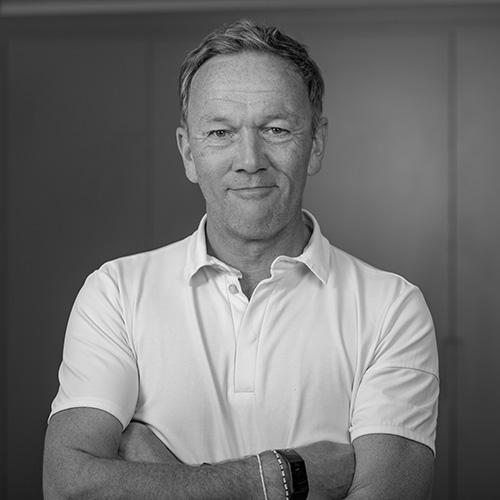

Sadie Morgan's Intro
It should be no surprise when you have such a diverse, stellar group of people around the table that a lively and passionate discussion will ensue. What I did find surprising was the level of agreement on the emerging themes highlighted by the NLA membership; plan for the long-term, think beyond boundaries, embrace diversity, focus on health of people and planet, invest in innovation and prioritise partnership. Not always agreement on the semantics, I should add, but definitely on the direction of travel – leave a legacy, for example as opposed to long-term was an early challenge.
With brilliant provocations from Dame Alison Nimmo and Tony Travers the group responded with equally robust reflections. A continual challenge from the group was to see things through the lens of people, place, and the lived experience.
Chairing a group of such passionate and thoughtful Londoners is one thing, summarising quite another. Here goes.
We need immediate action, built on a socially based infrastructure that harnesses the community spirit of Londoners and is of sufficient quality to leave a positive legacy – as long as it’s still a bit messy.
No pressure then.
NLA's Sounding Board has delivered a broadly upbeat verdict on London’s future, with the majority saying they were optimistic that the capital will flourish under a new UK political framework. But at the same time members offering a ‘sober’ or pessimistic view pointed to problems in housing, the economy, sustainability and perceptions of high levels of crime as evidence of London’s dented reputation on the world stage.
The votes came during a ‘temperature test’ ‘topic of the day’ session at the beginning of the second New London Agenda meeting last week chaired by Sadie Morgan, at which the board were asked to assess what recent devolution deals mean for London.
LCA’s Robert Gordon Clark was in the negative camp, largely due to a combination of Credit Suisse, delays to High Speed Two and the budget leading to a largely cool response from the investment market at MIPIM - and the city’s image on safety having been damaged by the ‘disastrous’ report on the MET police. But that mood was tempered by people like U+I’s Martyn Evans who said he was positive, not least about the way U+I are investing in building, that there are cranes all over the city, and Evans’ view that London may not be used as a political football over the next few years, with the prospect of a shared agenda between Keir Starmer and Sadiq Khan. ‘That is going to be transformational’, he said.
Fletcher Priest’s Dipa Joshi also opted for positivity, ‘because crises are great for creativity, and it definitely feels like the city needs to reinvent itself’. The GLA’s Louise Duggan pointed to ‘shoots of positivity’ through things like the Growth Fund, with 40 delivered with, and in, communities, despite the pandemic. ‘And they are excellent’, she said, also citing the work done by the architecture and urbanism panel. Arup’s Jo Negrini said she was ‘forever positive’ and that there was a new opportunity for people to come together. But LSE’s Tony Travers offered his view as a ‘natural pessimist’, seeing an economy which leaves governments and oppositions little room to manoeuvre and Britain becoming less attractive as a place to invest. ‘I just think the economy needs attention. Politically good, economy less so’.
Binki Taylor of the Brixton Project said that although certain communities were finding London a difficult place to live in health and poverty terms, there is nevertheless a sense of transformation. But NLA senior advisor Greg Clark said he was ‘sober’ in his view that cities succeed and fail in long cycles, not short ones, and that the rest of the world is still ‘curious’ about London, and that its success model has always contained the space for opposition, dissent, alternatives. ‘And I think with those seeds come change’.
TfL’s Graeme Craig suggested that there was a flight to quality and a critical mass of people ‘who get it, who aren’t waiting for government to come to the rescue, and who recognise that we just need to sort it out ourselves…And ultimately, for me, the bottom line is there’s nowhere else I’d rather be’.
Argent’s Robert Evans, moreover, suggested that out of adversity and economic hardship, some of the best projects often emerge. ‘That’s when people come together and make things happen’, he said.
The final score, Morgan summed up, was at least affirmative: three negatives, six ‘sobers’ and 11 positives.
This quick fire assessment was followed by two presentations geared towards extracting more thoughts as NLA progresses with the New London Agenda – first on the notion of planning for the long-term, presented by Dame Alison Nimmo, and second on thinking beyond boundaries by Tony Travers.
Nimmo’s first provocation was in part founded on what ‘long-term’ means. The Great Estates, and the way that they have adapted and changed over time, are to do with long-term ownership and ‘stewardship’, she began, adding something and passing it on to the next generation. But it is also about future-proofing and adapting in an era where the pace of change is rapid, and particularly to do with infrastructure ‘allowing the arteries of the city to function better’. London had got it wrong in the past, including periods of declining population and the abolition of the GLC, largely due to a lack of strategic leadership and ambition. But the city rallies round. ‘I think not just in times of crisis, but when we're given a big problem to solve like the Olympics, it’s extraordinary how people come together and do great things’, said Nimmo.
One of the key points, though, is what the former governor of the Bank of England Mark Kearney called the ‘tragedy of the horizon’ and lack of incentives for the current generation of leaders to fix somebody’s else’s problem. London needs to think not just of being resilient but to turn big problems into opportunities; not just economic ones, but social too.
Comments on this provocation ranged from Martyn Evans’ view that there needed to be a much greater understanding that quality of place creates long term value, to Avison Young’s Kat Hanna’s about the conversation around social value: ‘no-one knows what the hell they’re doing’, she said, ‘but they know they need to do something’. However, the evidence of housing, said Robert Evans, suggests that people have often done the opposite to Evans’ model – invested in poor quality to make the highest returns, and perhaps the planning system encourages a short-termist approach.
There is no definition of what long-term is, said Network Rail’s Anthony Dewar, even though in the world of the civil engineer, it would be 120 years. We have significant changes to adopt before 2050, which is only 27 years away, so perhaps the reason we can’t say what is long-term is that it requires a co-ordinated, agreed plan.
We need to force the conversation, felt Publica’s Lucy Musgrave, in terms of the environment, perhaps as the Welsh Government has sought to do through the use of a Commission for Future generations ‘speaking truth to power’. Often, though, long-term just means slow, quipped Cath Shaw; better to think about the future and your legacy, and lessening your impact. ‘Planning for the long-term just sounds so turgid. I think we should reframe this as being a bit more future positive and a bit less planning’.
Tony Travers’ proposition was to do with thinking beyond boundaries – be that borough boundaries, professional boundaries or even ‘invisible’ boundaries. If you think boundaries don’t matter, Travers began, go to Finsbury Park where three boroughs meet and where, consequently, management is an issue. There are good structural and electoral reasons why boroughs put certain things on the boundary, and others in the middle of their areas. But all professions are accused of being ‘conspiracies against the public good’, Travers suggested, and rarely think of things outside their own professions. That leads to a professional defensiveness, where each discipline deliberately makes their language inaccessible to everybody else; the planning system is also a conspiracy against the public understanding, with long URLs stuck on lampposts for you to input into your computer before failing to open the huge file that results.
Architects and developers do try, in fairness, but because developers have to convince local people and councillors to get permission, they have to make themselves somewhat more accessible than other parts of the system. Government operates in siloes, each department with its own assigned budgets, and the lack of voice that people have makes all of these things more problematic. The invisible barriers include universities – actually quite an alien place to go, Travers said – there are barriers to cultural institutions, and even extremely expensive shops make people feel insignificant. There are also barriers faced by young men on the street, too, he added.
Discussion can help to reduce and smooth problems of this sort, while teams composed of people from different disciplines and backgrounds, working together around the table will be definitely helpful too, as will ‘finding ways of allowing people in carefully protected subsets of society to meet with each other in a reasonably friendly environment to discuss things of mutual interest’. The Sounding Board is a start, even if it is self-selected to a certain degree, and 8.8 million people never get any such opportunity; how to allow more people access to think about the barriers and then to have expertise that allows barriers to be more permeable, Travers added, ‘is probably where we should be going’.
Arup’s Jo Negrini said the climate offered an opportunity to galvanize different voices around a common enemy, with a different kind of infrastructure that is socially-conscious, replacing the ‘big kit’ type of infrastructure, and moving away from individual boundaries to a focus on 2030. ‘I’m so over plans and strategies and governments and steering groups and advisory boards, all of these kinds of things’, said Negrini, ‘because actually what changes places is action’.
For Graeme Craig, if you can’t have certainty, flexibility is the next best thing, since we can’t predict the future but at least should ensure that you don’t have to tear something down that can’t be adapted over time. ‘The other point is a crushing desire to avoid sterility’, he said. ‘Messiness is good; flux and change are what makes London, London…And even if you never reach the right outcome, at least you've got a sense of what good looks like’.
Share this news


Recent

News
Five minutes with… Leigh Johnson
David Taylor meets Leigh Johnson, managing director of Barking Riverside, to quiz her over the 20,000 homes project and...

News
Winning Design Announced for 'Hope in the Square' Competition
NLA in partnership with the London Borough of Southwark are proud to unveil the winning design of our 'Hope in the Squar...

News
Our partnership with ActionFunder to deliver measurable social value
NLA and ActionFunder partner to give London’s built environment sector a scalable way to deliver and prove community imp...
Stay in touch
Upgrade your plan
Choose the right membership for your business
Billing type:
Small Business Membership
£90.00
/month
£995.00
/year

For businesses with 1-20 employees.
Medium Business Membership
£330.00
/month
£3,850.00
/year

For businesses with 21-100 employees.

View options for
Personal membership