New London Architecture
Five Minutes With... Ed Green
Tuesday 27 February 2024
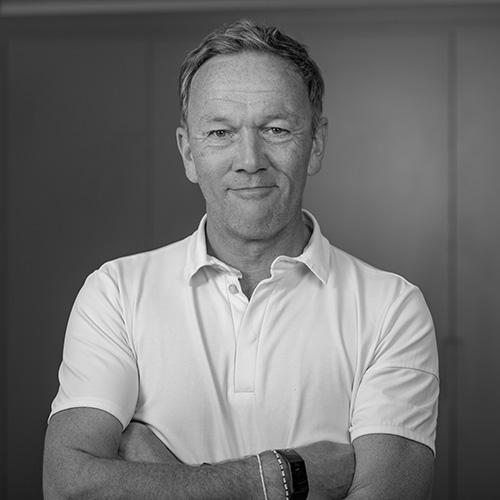

David Taylor meets Ed Green of Grosvenor, as the developer this week passes a major milestone – completing a million square feet of retrofit across its estate since 2020.
David Taylor
David Taylor
Hi Ed! Grosvenor has just passed a pretty impressive milestone, having retrofitted over a million square feet of your estate since 2020. I wanted to ask you, firstly, what you thought the secret to that was. And secondly, what you've chiefly learned in that process, and in that period?
Ed Green
Right, so what do I think the secret is? I think the secret to this is getting on with it. I think the risk of stuff like this is that you can overthink it and wait for all the stars to align before you do anything. And 2030 is really just around the corner. You may not get a perfect VP (vacant possession) of a building, or enough floor space to be void at the same time, or this, that and the other. You know, the stars all aligning at the right time. But it is hard. And whilst obviously you do need that stuff, what Grosvenor has had a lot of success in doing is getting on with it. So, when even though there are tenants in situ, having practical conversations with them about what can be done means that we've been able to have a really big impact. In the short term, yes, we're likely to have to go back into some of those spaces again, when they do become void. But it means that we've been chipping away at a very big number from day one, rather than waiting for it all to be perfect.
David Taylor
And is this part of the Grosvenor ethic? Is it inscribed into your ethos now, as a principle?
Ed Green
There has been a huge cultural change within Grosvenor over the last five years. And I think that has stemmed from when we put sustainability at the core of the business in 2019. We set some very ambitious sustainability goals across not just carbon, but also nature and waste and transforming the way that we work with our partners. And I think we realized relatively quickly that ‘business as usual’ wasn't going to get us there. We had to change the way that we approached our business. So that precipitated a big innovation drive. We realized the only way we were going to reach these targets was by innovating. So, there's been a big push on breaking down fear of failure, celebrating, giving things a go. Just giving things a try, basically. And I think that the success here definitely does speak to that.
David Taylor
Can we talk a little about Holbein Gardens, which is an NLA multi-award winner and seems to be pertinent to this whole conversation? Is that emblematic of the approach?
Ed Green
Yeah, I think so. Yeah, absolutely. But our million square feet relates to effectively work that's been carried out using our £90million retrofit fund. That is money that we put aside for specifically retrofitting buildings, if you like, without a standalone short-term business case. A business case exists at a portfolio level. We know we need to modernize the portfolio, to retrofit the portfolio to be fit for the future. So, the money has its own, if you like, fast-track approval process for the standing portfolio teams to access that money to do work. Holbein Gardens is slightly different, because that is a development project. It will have hit all our development projects hurdles, both financial and sustainable…
David Taylor
…Hopefully it made it over the hurdles rather than hit them!
Ed Green
Oh yeah! It has its own kind of framework. It was a decision we made back in late 2019, or early 2020 when this project was just getting off the ground. You're looking at the available options, and the business very quickly said let's see what we can do. Let's push the envelope and try and make this our first net zero building, which we obviously succeeded in.
David Taylor
So, what have been the main barriers in achieving this milestone, up to now? What's the next goal, if you have one, and if you set these things out? And you're calling for a national retrofit strategy – what does that entail?
Ed Green
The barriers? One of the tricky things, I think, has been about pipeline management. There are lots of different people in the business involved, competing priorities, making sure that every opportunity is being a) expedited and b) maximized, which I think we are now pretty good at. In terms of the next goals, well, I feel like the Retrofit program works quite well. I mean, it is hard; the low-hanging fruit is very much gone. But we now have a system in place that means that from my position, I'm pretty confident that we will be coming through everything at the right kind of rate, in the right way. Now, thinking more about how we then reduce the emissions of our buildings through the way they are operated and occupied. So, we have over 260 Green Leases in the portfolio. But a Green Lease is really just a piece of paper. You actually have to still engage and collaborate with your occupiers but also your property managers and facilities managers and receptionists and everyone who is involved in actually running the building itself. So, we're putting a lot of time and effort in this year to how we effectively operate the buildings. Retrofit is very difficult, and it's very expensive. And there are, I think, a lot of wins for us if we can learn how to run the buildings. Data is key.

David Taylor
So, turning then to your call for a national retrofit strategy – what does that entail and what's led you to call for this?
Ed Green
We did a piece of work – I don't know if you've seen it – called Heritage and Carbon.
David Taylor
Yeah
Ed Green
Exactly. So, the call today has been pulled from that piece of work. Through our own experience and through the past few years in which we did that work, it's clear that there are so many moving parts. We have found even just as one business, the number of moving parts involved in getting to this milestone is so significant. And we found barriers and blockages all over the place. To do what the UK needs to do needs a much more holistic approach where we're thinking about skills and resourcing, funding and standards, and support in a much more cohesive way that makes it easier for businesses that perhaps don't have the resources that the Grosvenors of this world have, to focus on this stuff. But it's actually about being supported and funded appropriately.
David Taylor
I noticed also from the element on incentives and financing options, to encourage retrofitting that there's mention of the equalization of VAT with new builds as a key starting point. I've been in this game for decades, and this has been bubbling up every year for as long as I can remember. Do you foresee any government actually doing that? I mean, it's sensible, isn't it? I don't know what the Treasury argument is. But you know...
Ed Green
Yes. It does not seem sensible to penalize retrofit. It feels like where we rightly support the development sector, we should be doing so in a way that incentivizes the right sorts of behaviour. And, you know, from every conversation, I go to whether it's the emerging, UK net-zero building standard to the UKGBC; in all these conversations everyone's talking about and including some great conversations we have with the likes of Westminster. Everybody is grappling with how you incentivize retrofit. And I think tax policy should align to that.
David Taylor
Excellent. Well, thank you for your time. Is there anything else you'd like to say about this or about your role going forward?
Ed Green
No, it's been great, David. Thank you.
David Taylor
Thank you. I'm sure it's been said before, but you are the most appropriately named sustainable person in a company I can think of! Nominative determinism in action!
Ed Green
It certainly is! (laughs)
David Taylor
(laughs) Lovely to speak to you.
Share this news


Recent

News
As we kick off 2026 Expert Panels, panel chairs share summaries, recommendations, reflections and key findings from acro...

News
Five minutes with... Neil Hook
David catches up with Neil Hook of Places for London to hear why 2026 will be an ‘absolutely transformational’ year for...

News
Enduring Design: Multiplying modular homes on Brownfield sites
RDA Architects show how compact brownfield plots can become high-performance homes, using modular construction and smart...
Stay in touch
Upgrade your plan
Choose the right membership for your business
Billing type:
Small Business Membership
£90.00
/month
£995.00
/year

For businesses with 1-20 employees.
Medium Business Membership
£330.00
/month
£3,850.00
/year

For businesses with 21-100 employees.

View options for
Personal membership