New London Architecture
New Londoners – Striving for Place
Wednesday 01 April 2020
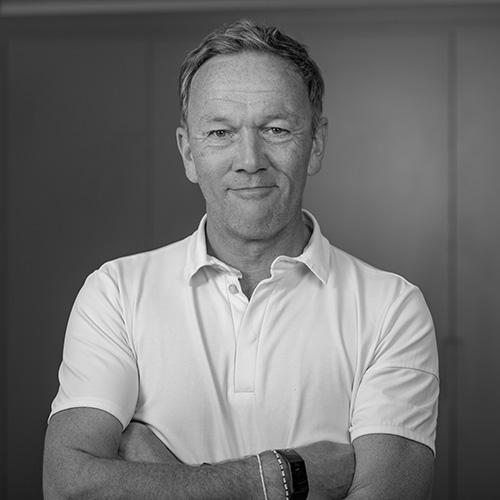

With responsibility for £20bn of projects, Lendlease’s Selina Mason and Bek Seeley are big players in hugely significant schemes for the capital including the regeneration of Euston, Silvertown and Elephant and Castle. David Taylor met them.
‘It is a striving organisation. It wants to do good things'.
So says Selina Mason, head of masterplanning at Lendlease, and someone who moved to ‘the dark side’ two years ago after helping to bring a successful Olympics to London. At least, it was her friends who saw it that way, perhaps suckered into a general perception of developers as being more about commercial success than creating real places with heart that work for people — something that’s pretty much central to Lendlease’s long-held core beliefs. ‘Then, of course, you get the phone call’, she laughs, ‘“Hey, Selina, have you got any jobs for us?”.’
I catch up with Mason and Bek Seeley, the latter of whom had been named as the organisation’s new managing director, development, Europe, the day before. She replaced Jonathan Emery, who left fairly abruptly just before Christmas and will doubtless resurface elsewhere in the regeneration game. That, after Dan Labbad left to become the Crown Estate’s new chief executive only last April. All change.
And that’s appropriate for the sizeable chunk of Lendlease’s portfolio at Euston and Birmingham that got a significant injection with government’s long-hoped-for approval of HS2. Seeley — a friendly and energetic Worcester-woman who travels up to Birmingham every day where the firm is creating a multi-billion-pound ‘place’ on a 14-hectare site at Smithfield in the city — is credited with having played a key part in winning projects like Euston, as well as the £8bn Thamesmead project with Peabody and Silvertown Quays. So a lot rode on the outcome of the review into HS2, ‘bookended’ as it is by the company’s deep, complex and far-reaching work. Happily, of course, the line was deemed to be too far gone to be stopped, and Boris Johnson rubber-stamped that view in February.
But at either end it will test Lendlease’s ability to create vibrant, popular places, and in the case of Euston, one which will keep and sometimes pique the public’s interest and minimise the nuisance done to them all along this long-running scheme.
Effective consultation is, of course, a crucial aspect of this, and Lendlease can begin that in earnest now, while pioneering work on loneliness that looks like it is a good hook on which to involve locals from Camden and further afield. ‘It has taught us a lot’, says Mason of the Loneliness Lab Lendlease created around 18 months ago, reinforcing some of its beliefs through ongoing research (see page 18) and putting lessons back into its projects via an in-house social and economic team. ‘You really get the sense that we need to design places that just help people feel they can engage in a conversation more easily’, Mason says.
As part of this, Lendlease worked on an exhibition with Central St Martins, Collectively and Camden Council on the One Euston Project, creating an exhibition of portraits of local people suffering from loneliness issues, held at its Regent’s Place exhibition space. After all, adds Mason, in masterplanning, any kind of setting in which you can create empathy and mutual understanding in a genuine conversation is important.
Seeley’s back history includes a spell at AECOM, a very different organisation which, in contrast to Lendlease, she felt to be ‘very corporate American’, and so big that it is process-focused. ‘Lendlease is very project-delivery focused because we have to be’, she says. ‘And that creative, innovative piece runs through.’
The firm is well connected, which also helps. The day before our interview, foreign secretary Dominic Raab was in Barangaroo in Sydney — one of Lendlease’s premier projects designed by Rogers Stirk Harbour + Partners — in what was the first visit outside the UK by a government representative on trade since Brexit. Raab was there at Lendlease’s global headquarters to talk investment in the Midlands and the North, part of the government’s ‘levelling up’ agenda, but there was also time for a 20-minute meeting for Lendlease to showcase Westfield to the minister. Raab would have been interested to hear how the company has been operating in the UK since 1991, employs over 1,300 people and has a pipeline of projects within London and further afield in the UK valued at more than £20bn, including Euston. Lendlease is very project delivery-focused because we have to be’
‘I think the government understands that a key part of that is infrastructure’, says Seeley, and HS2 is a ‘critical part’ in opening up capacity — the bit that gets buried in much of the noise around the project. ‘But it’s the critical piece, from somebody who uses that Birmingham to London line every single day’, she adds, mourning her regular ‘painful’ suffering at the local end after changing at Coventry, principally because they are all using the same line. ‘I am really confident that the government does understand that it needs to do that scale of project to make local transport for those cities and the regions work.’ Both Euston and Birmingham are projects of international investment scale which have brought high levels of interest, important in Britain’s new ambitions for trade.
This may in turn mean that Lendlease looks more to projects outside London, but for the moment its presence in the capital is formidable. Historically it had significant presence in the regions, but more in construction-related activities, as well as national projects such as military work and schools. So it is more of a ‘resurgence of ambition’, says Seeley, as well as the city and placemaking piece that the developer strives for. ‘It does feel as if it is a new wave’, she says. ‘Of investment, ambition, opportunity, energy, coming through in all of these regional cities.’
How would they characterise their approach to placemaking? ‘I think it’s very focused on people, fundamentally’, says Mason. ‘It’s not seeing place as something that is aesthetic or visual. It’s very much about how a place works for the people who are using it and living in it, working in it, passing through it. Building a sense of belonging and community. I think that’s got to be at the heart of it.’
It’s also key to create places that are enduring and where people want to stay, Mason goes on, rather than somewhere that just looks pretty. ‘It goes way beyond that, and that’s the kind of direction we’re trying to take our design in. To really pay close attention to the kind of environment that you can create around bumping into your neighbour.’
Lendlease believes that it is doing well in getting the inside of its apartments right, but now wants to enrich people’s experience of home beyond the front door. In a city like London, with such transient populations, this is fundamental, as is its desire to allow residents to ‘influence’ the place too. ‘That’s the thing that builds place, and belonging, over time’, Mason says.
Lendlease believes that it is doing well in getting the inside of its apartments right, but now wants to enrich people’s experience of home beyond the front door. In a city like London, with such transient populations, this is fundamental, as is its desire to allow residents to ‘influence’ the place too. ‘That’s the thing that builds place, and belonging, over time’, Mason says.
Seeley is keen to stress that these must be inclusive and welcoming places, too, where everyone can benefit and feel part of the mix. ‘That is hard, but has to be the aim.’
So which in its own portfolio gets closest to this? Seeley cites Elephant and Castle, partly achieved through design and the layouts of buildings; the feeling of ‘fitting in with what’s around it’. What will make it feel more inviting and inclusive beyond its halfway stage now is a mix of retail to add to the residential, along with entertainment and providing ‘the animation piece’. Mason adds that they are seeing rewards in investment in a local meanwhile-use scheme, producing an interesting pattern of local support and building businesses to add to the rooted nature of the street scene. ‘You have to show that development isn’t just about bricks and mortar’, she says. ‘Seeing is believing. You have to demonstrate that you’re committed.’
Seeley points to another good example in York. Lendlease is in a joint venture on the Hungate scheme, another long and complex journey that sits and fits within the historic city walls, and of which Seeley is also proud.
Eastern promise — the International Quarter, London
Eastern promise — the International Quarter, London

Is there a Lendlease ethos they think is understood by the public and the market? Seeley thinks the underlying values (she prefers that to ‘ethos’) of what they are trying to achieve in the UK and Europe are consistent and shaped by the communities they work in. ‘We work with so many partners and that’s a core part of our business and in everything you do you learn different things and you give different things too.’ She would be worried if they were the same everywhere. ‘The dividends are shared’, Mason adds. ‘And from being here for a couple of years it’s been really interesting to uncover a little of the DNA of Lendlease.’
Perhaps, though, this principle is not well understood or communicated. It is essentially the belief system of founder Dick Dusseldorp, who set up the firm in 1958 around the need for developers to generate social and environmental benefits as well as its own rewards. The firm is not, after all, this ‘scary and very macho machine’, as Mason dubs her initial misconception. It is also seemingly a good place to work as a woman, coming in the Top 50 firms for that principle in a listing run by the Times in 2018. One of the reasons for the accolade was that Lendlease opted to become one of the government’s ‘early adopters’ by publishing its gender pay data six months ahead of the April 2018 deadline.
Before Mason came, she was working for Lendlease on the aborted Haringey Development Vehicle project, which she felt was nevertheless both inspiring and enjoyable as well as eye-opening in terms of the way Lendlease led the conversation among the consultant team. She felt ‘tuned in’, much to her surprise, but also believes that Lendlease are often lumped in with other developers towards whom London communities feel resentment at not always receiving the dividends they should have done from accommodating uplifts in densities in their areas.
Seeley remembers when she started and Lendlease was a relatively new name. It was in fact easier to say she worked for Bovis at the time, she jokes. Lendlease is learning its identity in Europe, she says, having been through a strategic refocus, pulling out of countries where they felt they weren’t at the right scale. The ongoing journey then influences their focus on delivering high-quality places with its first priority being safety. ‘It is not something we think about when we get to site. It comes right at the start.’
So, more on Euston. Seeley led the project to bid and secure Euston, which she feels is a ‘real symbol of what the UK can deliver on a global scale for the next 10, 20, 30, 40 years’. It also offers Lendlease the opportunity to demonstrate what it can do for the community. ‘It rings with me very clearly every day that a generation and more will live with a construction site at Euston. So it has to be amazing and offer opportunity all along the way’, she adds. Working with students at Central St Martins on this aspect will help, but the scheme has to be carefully negotiated as Lendlease is merely the oversite developer. ‘Creating places isn’t to put a massive hoarding up, bury yourself behind it and open it up in a few years’ time: (and say) it’s amazing’, says Seeley. It is also, adds Mason, an ‘extraordinary and amazing’ project because it has everything you can think of to add complexity. Not just the infrastructure but two station providers — Network Rail and HS2 — a historic environment, ‘incredibly highly valued’ public realm like Euston Square Gardens, and all the complexity of a world city with Euston Road on its doorstep and the negative impact that has had on the place for so long. Plus it is in the privileged position of being between the disconnected communities of Camden Town and Bloomsbury. ‘If we can bring those two places together; bring a bit of Camden High Street into Bloomsbury and Bloomsbury into Camden, I think you’ve got something which could be incredible’, says Mason. Time is the thing that distinguishes masterplans from all other designs, she adds, and this one is so long-term and complicated, and so intense at each stage. Furthermore, it will also need to demonstrate how the developer can deliver on zero carbon through a ‘quieter’ type of construction with different materials and systems.
Switching across Lendlease’s impressive map of London projects over to the east, Silvertown, meanwhile, is an amazing symbol of what east London can do, with Millennium Mills at its heart, says Seeley. The opportunity is how that place fits within the rapid development around it, she adds, anchoring it with a ‘town centre-type feel’ and benefitting with more people. The project has won planning and represents an opportunity for high-density residential development to be more rounded, and invested with ‘communal centre and heart’ rather than ‘suburbs on steroids’, as Mason calls them. The ‘found’ post-industrial landscape is also quite intriguing, she adds, with something ‘amazing’ needed to build on, but also retaining the ‘wild’ character of Millennium Mills, maintaining the place’s identity.
As ever, communication will be important, and masterplanning more generally is something that the professions overcomplicate, making language too esoteric for a wider audience. One of the bigger parts of Mason’s job is to make sure they understand what projects are about so they can communicate the vision to people with conviction and authority. ‘And really passionately as well’, adds Seeley. There’s a real tendency in the design professions to just go to the answer without addressing the questions and problems or having the humility to listen and adapt what you’re thinking. ‘People love drawing’, Seeley says.
‘Creating places isn’t to put a massive hoarding up, bury yourself behind it and open it up in a few years’ time’
Finally, International Quarter London is another key project for Lendlease with an opportunity to work well given that the whole shape of the Olympic Park is clearer and less of an ‘island’, East Bank has come forward and Westfield’s wider plans are known. IQL is now in the midst of things and there’s an opportunity to create a more mixed-use space, ‘almost like a city quarter’, says Mason, ‘a composite of all components of city life’ when viewed with the cultural offers of East Bank. ‘The bone structure is all there’, she says. ‘It’s just a slight re-orientation and rethinking of how all this sits within the bigger picture. To some extent that is an inevitable part of masterplanning. No masterplan is ever complete within a nanosecond. They take a long time to evolve.’
‘IQL? It’s just Stratford’, adds Seeley, offering something of a motif for the firm’s work at this significant moment. ‘Because it’s all coming together. It’s up there and now we are fitting into the greater part. And that feels like the pivot point.’
The Lendlease exemplar — the vision for Elephant and Castle
The Lendlease exemplar — the vision for Elephant and Castle

Buy a digital copy of NLQ here for £7.50.
Share this news


Recent

News
NLA welcomes its Sounding Board for the first meeting of 2026
Senior industry leaders meet at The London Centre for the first 2026 session of the NLA Sounding Board, shaping the dire...

News
Housing at a Crossroads: Expert Panel Responds to Policy Upheaval
Miranda MacLaren, Chair of NLA’s Housing Expert Panel, reflects on policy upheaval, market failure and practical solutio...

News
How things have changed: smoothing out the wrinkles in Gateway 2
From 65 weeks to 63 days: Stevan Tennant on Gateway 2 delays, the impact on housing delivery, and how BSR reforms are he...
Stay in touch
Upgrade your plan
Choose the right membership for your business
Billing type:
Small Business Membership
£90.00
/month
£995.00
/year

For businesses with 1-20 employees.
Medium Business Membership
£330.00
/month
£3,850.00
/year

For businesses with 21-100 employees.

View options for
Personal membership